Start with the intended product and channel
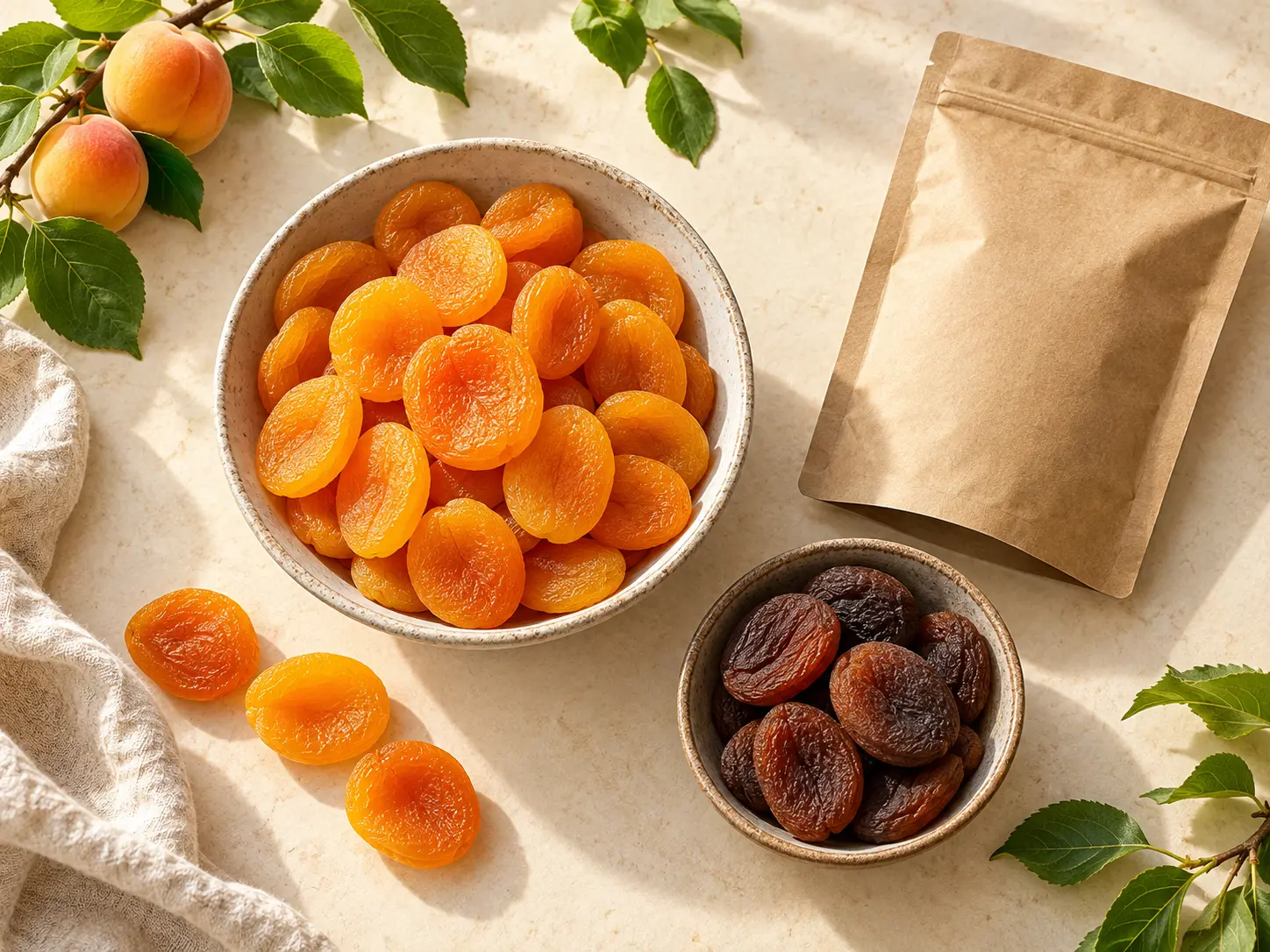
An offer for dried apricots is only useful when it describes the product you intend to sell. Tell the supplier whether you need whole fruit, halves or another presentation, a retail snack pack, a foodservice pack or an ingredient for further processing. Specify the destination, planned channel, target consumer-unit size and estimated demand as a planning figure. Ask whether the proposed product is treated with sulphur dioxide or presented without that treatment, and request the actual ingredient and processing declaration; colour alone cannot establish the treatment. The UNECE Standard DDP-15 for dried apricots provides a useful commercial-quality reference for presentation, quality classes, sizing, tolerances and marking. Agree which edition and which parts your contract adopts instead of treating a standard citation as a complete purchase specification.
Turn a sample into acceptance criteria
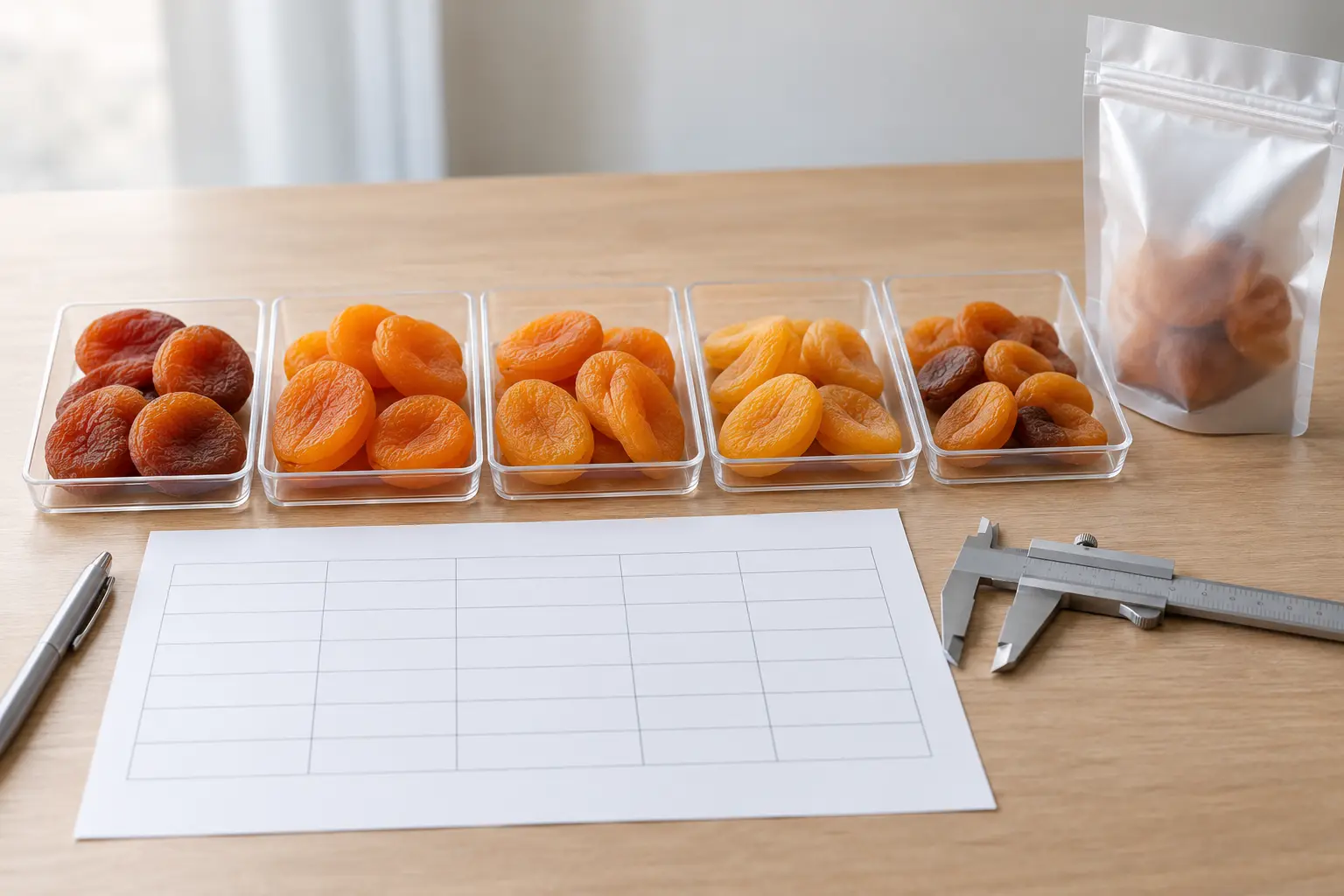
Request a representative sample identified by supplier, specification version and proposed production range. Compare size distribution, shape, colour consistency, texture and visible defects across more than a few attractive pieces. Ask for the proposed grade, sizing basis and allowed defect tolerances in writing, with a sampling method and an agreed remedy if a delivered lot differs. Discuss moisture or water-activity targets, storage conditions and shelf-life evidence with the supplier in terms appropriate to its process and pack. If pitted or cut fruit is offered, define how fragments or foreign material will be controlled. A photograph cannot settle any of these points. Record the approved sample, the dated specification and the commercial lot identifiers together so a later discussion can refer to the same product.
Ask specifically about sulphites and labelling
Dried apricot offers may differ in treatment and ingredient declarations. For an EU retail destination, check the applicable additive conditions and the finished product's sulphur dioxide or sulphite information with the responsible food operator; do not infer compliance from “natural”, “bright” or “unsulphured” marketing words. The European Commission’s allergen information identifies sulphur dioxide and sulphites at specified concentrations among substances requiring declaration. Its mandatory food information guidance also covers the food name, ingredients, net quantity, durability date, operator and nutrition declaration for prepacked foods. Label language, claims and any destination-specific rules need a separate review before artwork approval. Obtain the draft label and the data supporting it, rather than copying another market’s pack.
Build a pack and shipment brief
A resealable pouch, a sealed tray and a bulk carton can create different handling and cost assumptions. Give the buyer-facing pack material and unit net weight, units per case, case dimensions, pallet pattern, barcode ownership and shelf-life marking position. Ask how the finished pack will protect the specified quality during the proposed transport and storage period, and request evidence for the stated shelf life rather than a generic promise. For a private-label range, agree who owns artwork, who checks translations and when print proof becomes final. Our private-label food brief sets out the information a brand team should share early. The wider food product sourcing page can help position this item within an assortment discussion.
Compare a landed offer, not a headline number
Use one request sheet for every potential supplier. Ask for product grade, treatment and pack in the quoted description, price per unit and case, currency, minimum order for that exact configuration, lead time, offer validity, payment milestones, delivery term with named place and the documents to be supplied. Separate confirmed facts from estimates and ask whether sampling, tooling, artwork or pallet changes are charged separately. A quote for bulk untreated fruit should not be ranked beside a printed retail pouch solely by price per kilogram. The export quote comparison guide offers a reusable structure. Actual price, availability and minimum order must be confirmed for the particular enquiry; this article does not imply that Marnivo holds stock.
Check the import path and send a precise request
For an EU destination, check the product's tariff classification and current import procedures in the European Commission’s Access2Markets assistant, using the actual origin and destination. Do not derive a duty rate or document list from “dried fruit” alone. Before shipment, reconcile the approved specification and artwork with the commercial invoice, packing list, batch identifiers and agreed transport documents. A practical opening request is: “Please quote dried apricot [presentation and treatment] for [country/channel], [unit pack] and [estimated volume]. Supply your dated specification, grade and size basis, sample, ingredient and sulphite information, quality and shelf-life evidence, carton and pallet details, minimum for this pack, lead time, delivery term and available documents. Mark any unconfirmed item.” Review the reply line by line and resolve gaps before a purchase order.