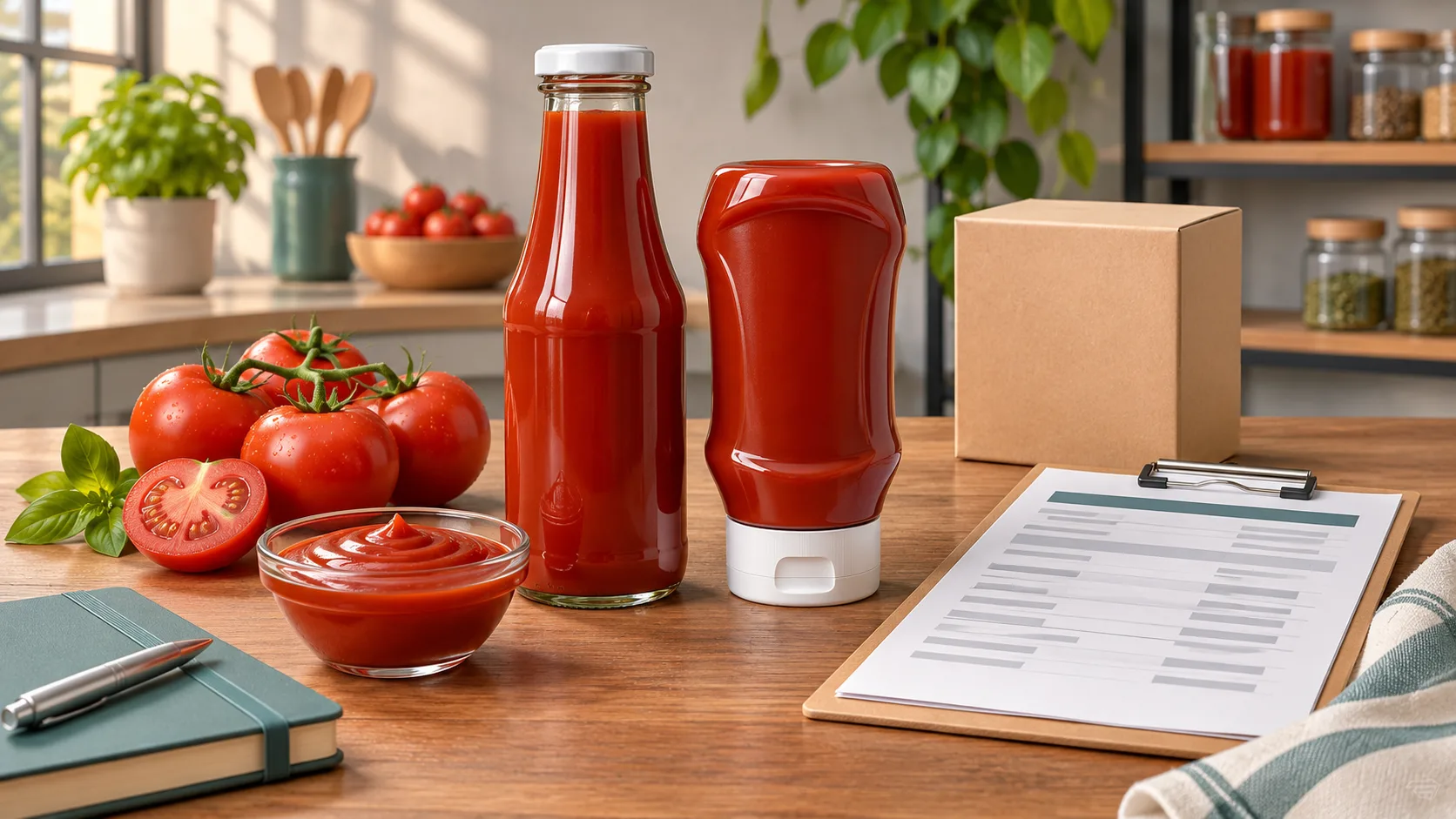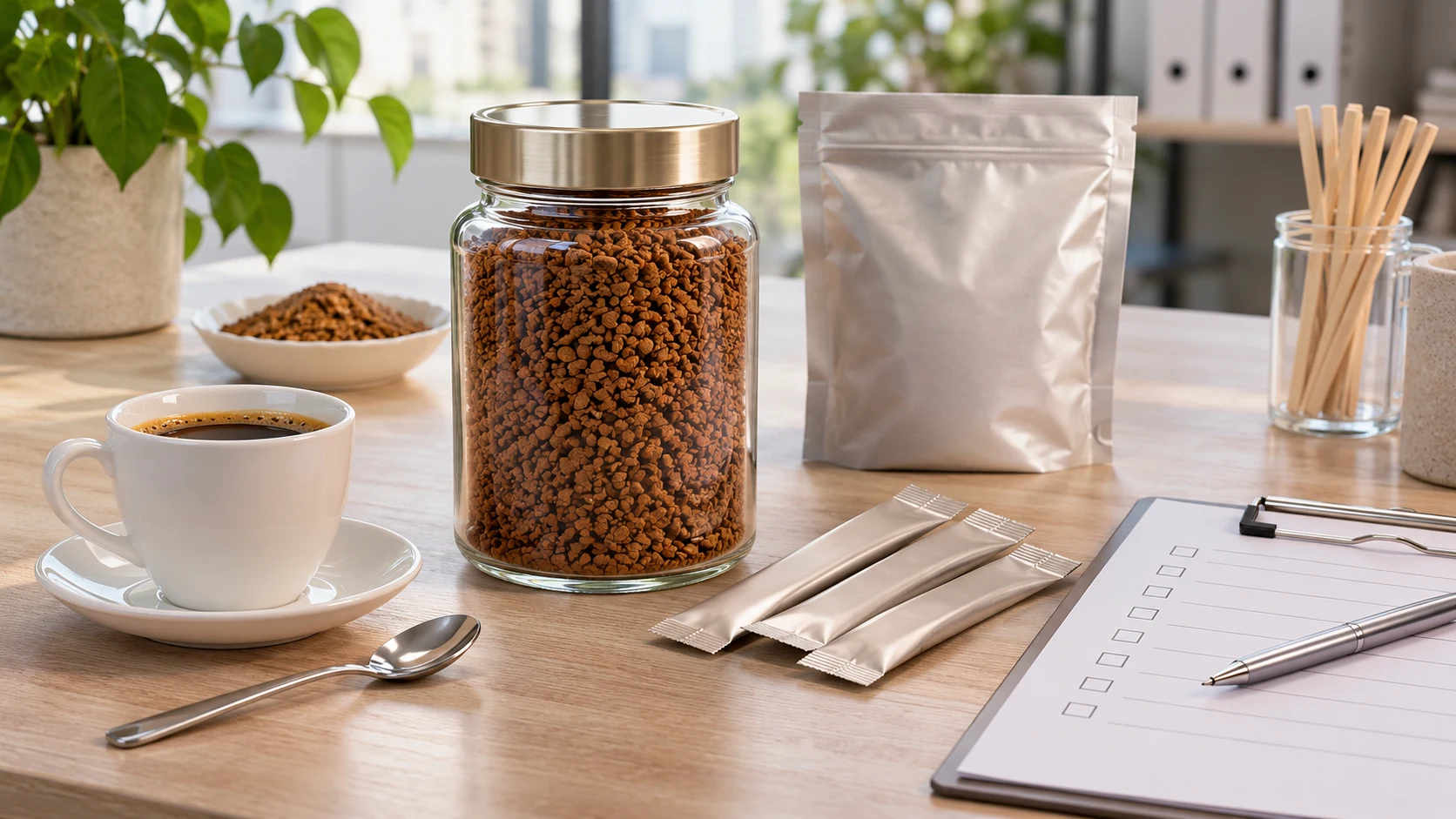

A private label inquiry often begins with a design idea: a brand name, colors and a reference pack. Production planning begins earlier. A manufacturer or sourcing partner needs to know which product is inside, how it must perform, which market will receive it and how much you expect to order. Those decisions affect feasibility, minimum quantities and lead time.
1. Choose the product route
There are three common starting points: a producer’s existing formulation with your branding, an existing product with packaging changes, or a product developed to a new specification. They involve different review and sampling work. Describe the route you prefer, then identify which attributes are fixed: ingredients, taste or texture, size, claims, shelf life and price position. A visual reference is helpful, but cannot replace a written product target.
For example, “retail olives under our brand” still leaves variety, preparation, liquid medium, net and drained weight, jar or pouch, lid, carton and shelf life open. For sauces, thickness and ingredient declaration may be central. Begin with the food categories we discuss, then use our private label overview to frame a product-specific request. Do not assume that a pack used by another producer can be replicated unchanged.
2. Plan the pack as a system
List the consumer unit, closure, master carton, intended shelf presentation and handling needs. Confirm who supplies or approves artwork, who owns the barcode and what languages belong on the pack. The label should be reviewed against the actual formulation and the rules in the destination market. If sustainability or particular materials are essential to your brief, state the technical requirement instead of a vague claim such as “eco friendly.”

Volume should be expressed at the level the producer will quote: consumer units per SKU, units per carton, number of SKUs, first order volume and an indicative reorder plan. Ask for the specific minimum for each proposed product and format. One minimum quantity does not apply across all private label categories. The importer should verify any local label or food requirements; EU buyers can begin their market check at the European Commission’s Access2Markets portal.
Consumer unit and fill · container and closure · carton configuration · languages · barcode owner · artwork owner · target market · approval contact.
3. Agree the sequence before printing
A useful project sequence is: product brief, feasibility review, sample and specification, commercial offer, artwork proof, final technical and label review, then order confirmation. Decide who signs off each stage and how changes are documented. If a sample recipe changes, review the ingredients and claims again; if the container changes, revisit dimensions, carton quantities and freight assumptions.
Keep the approved specification and pack artwork under clear version names. The product description on the commercial documents should match what is actually produced and packed. Ask for current photographs of the proposed export carton before dispatch if carton presentation matters to your customer. These steps take less effort than resolving conflicting descriptions after shipment.
4. An illustrative first brief
“We need a private label tomato paste for retail in [country], in [net weight] jars, [units] per carton, with [language] labeling. Initial volume is approximately [number] units across [number] variants. Please advise feasible specifications, packaging options, item-specific minimums, sample process, artwork requirements and a proposed delivery basis to [named place].” Replace the brackets with real decisions; leave unknown points clearly marked for discussion.
That brief makes it easier to identify genuine choices. A request that only says “we need the cheapest private label” invites offers for different products and pack formats that cannot be compared fairly. For a stronger first contact, read our export quote request guide or send the details through the inquiry form.
- Match the label text to the approved product specification.
- Identify the importer’s market and language requirements.
- Confirm physical pack and carton dimensions.
- Record a named approver and artwork version.