Two olive oil offers can show the same price per bottle while describing different products. The oil category, evidence for the stated grade, container, destination label and delivery basis all affect what the importer is actually buying. Before comparing prices from Türkiye, make each supplier quote against the same written brief.
Start with the exact oil category
Ask the seller to name the commercial category in full: extra virgin olive oil, virgin olive oil, olive oil composed of refined and virgin olive oils, or olive-pomace oil. These names are not interchangeable. The European Commission's olive oil overview explains which categories may be sold to consumers in the EU and how categories are assessed. Extra virgin oil, for example, must meet chemical and sensory criteria; a low acidity figure by itself does not establish the grade.
Write the intended use as well as the grade. A retail extra virgin product, a food-service pack and an ingredient for further processing create different packaging and documentation questions. If the proposal uses a broader term such as “olive oil,” ask the supplier to clarify the precise category before comparing it with another offer.
Request evidence tied to the proposed lot
Request the product specification and a recent analysis for the oil being offered. Ask which lot or batch the report covers, when the sample was drawn, which laboratory performed the work and whether the report represents the actual shipment or an earlier reference lot. If the oil is described as virgin or extra virgin, ask how sensory assessment is handled for the applicable market. The International Olive Council's standards and methods provide a technical reference for the characteristics and test methods of traded olive oils.

Do not treat a sample bottle, a generic certificate or a label mockup as proof that every future batch meets the same specification. Agree on a practical approval point: which documents and samples will be checked before production or dispatch, and what happens if the proposed lot differs from the approved one.
Compare the pack and the usable shelf life
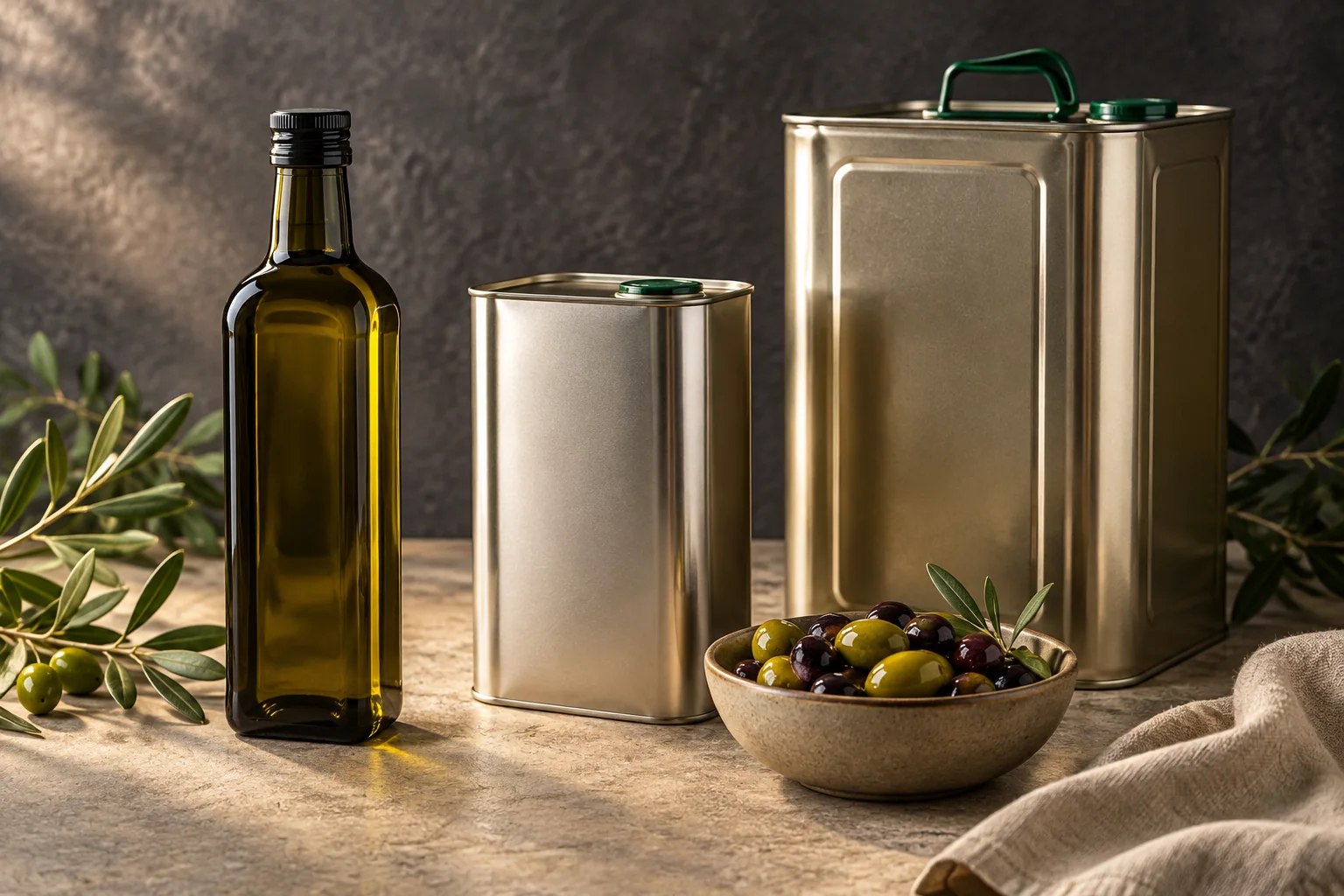
Specify the consumer or food-service format, container material, closure, net content, units per carton and cartons per pallet. A 500 ml dark-glass retail bottle and a 5 L metal tin can serve different channels even if the oil inside is identical. Ask for filled-pack dimensions, gross weights and pallet configuration so freight and warehouse costs can be compared on the same basis.
Also agree on the minimum remaining shelf life at dispatch and arrival, rather than requesting only the printed best-before date. Ask how the oil will be stored before dispatch and protected during transport. If your sales channel needs a particular harvest-year statement, treat that as an explicit requirement subject to evidence and destination rules, not a decorative label claim.
Review the destination label before printing
Ask for the final label artwork, not only a photograph of a previous pack. Check the category name, origin wording, mandatory particulars, language, importer details and any optional statements against the destination's rules. For EU retail, the Commission identifies Regulation (EU) 2022/2104 as a source for olive oil packaging and labeling rules; general food-information rules also apply. Optional expressions such as “first cold pressing,” “cold extraction” and harvest year have specific conditions. Buyers outside the EU should check their own market's requirements rather than copy an EU label.
If you plan to sell under your own brand, settle who approves the technical copy and who owns the artwork files before printing. Our private label food brief helps organize those decisions.
Put comparable numbers on one offer sheet
Ask each seller to quote the same category, pack, destination and estimated order volume. Record the named delivery place and trade term, production or dispatch window, payment basis, sample cost and which documents are included. A bottle price alone says little about landed cost when carton count, palletization and freight scope differ. Use our export quote request guide to make the commercial questions consistent, or browse the food sourcing categories for related products.
Before ordering, confirm the destination-specific import requirements for the exact product and route. EU buyers can use the Commission's Access2Markets as a starting point, then verify the result with their customs and food-compliance advisers. Avoid assuming that a prior shipment to another country establishes the requirements for yours.
- Exact oil category and intended sales channel
- Specification, lot-linked analysis and sample approval
- Container, closure, carton and pallet details
- Remaining shelf life at dispatch and arrival
- Destination label artwork and claim review
- Quantity, named delivery place, trade term and document scope