Name the product for its destination market
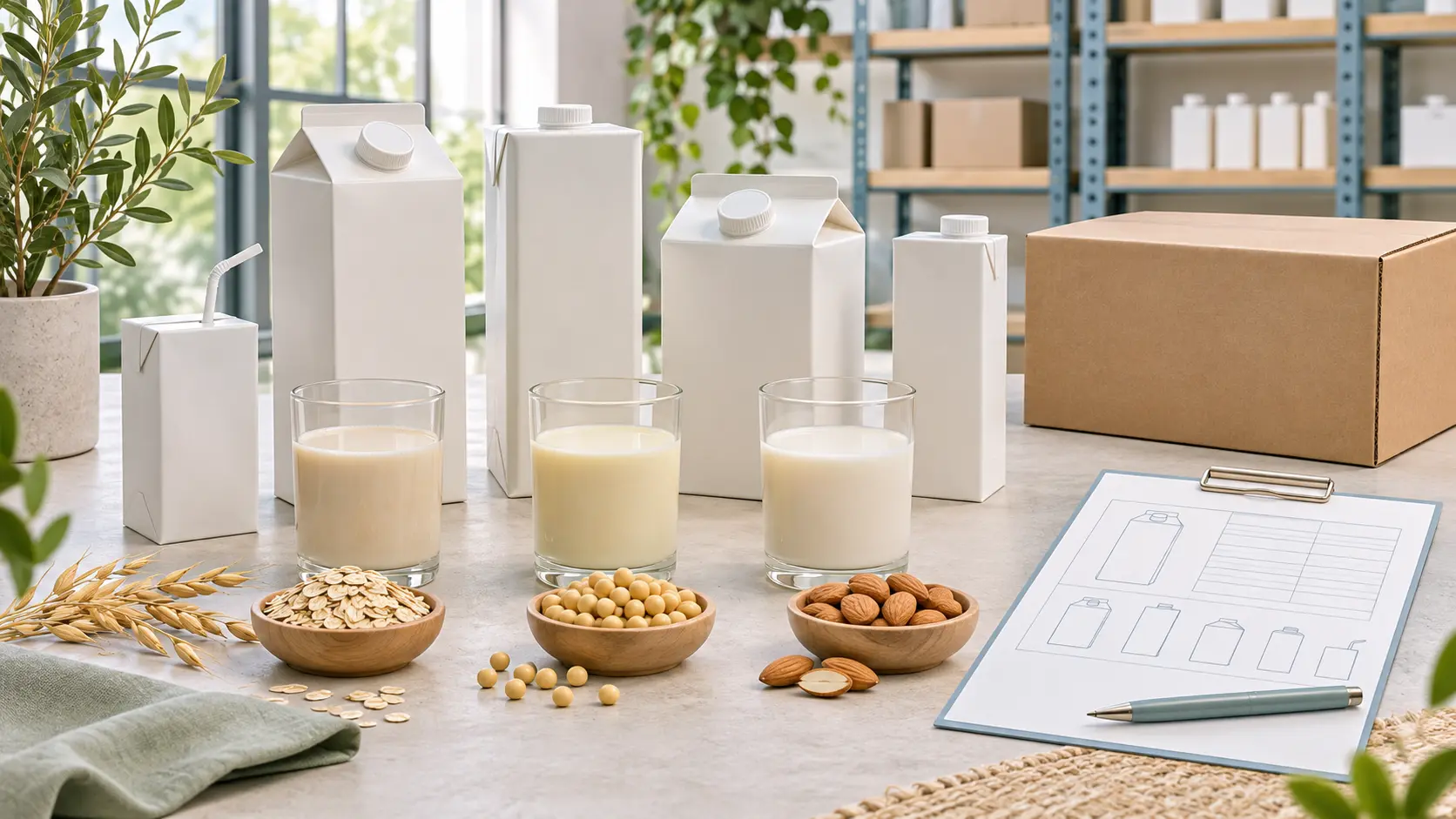
Begin with the exact product and destination, not a generic request for “plant milk”. For an EU brief, use a descriptive identity such as oat drink, soy drink or almond drink while the final legal name is reviewed for the destination language and presentation. Regulation (EU) No 1308/2013 reserves “milk” and several dairy designations for products of animal origin, subject to listed exceptions. The Court of Justice confirmed in case C-422/16 that purely plant-based products cannot use reserved dairy names merely because explanatory wording is added. Verify the current exception list and national practice before artwork approval.
Record channel, consumer use, ambient or chilled positioning after opening, pack size, serving context and destination. The beverages buyer page frames the category, while the private-label workflow assigns responsibility for formula, samples, artwork and change control. A Turkish supplier or packing address does not by itself prove the origin of every ingredient.
Freeze the recipe and allergen map
Ask each bidder for a controlled formula with ingredient percentages or agreed disclosure, ingredient specifications, permitted substitutions and processing-aid status. Define the plant base, water specification, oil, sugar or sweetener, salt, stabilisers, emulsifiers, flavours and any cocoa, coffee or fruit component. For EU supply, check each additive and its conditions of use against Regulation (EC) No 1333/2008 rather than accepting a familiar E-number as sufficient evidence.
Map allergens from recipe through shared equipment. Soy and almonds are among the substances listed in Annex II of Regulation (EU) No 1169/2011; oats require a cereal/gluten assessment appropriate to the exact source and claim. Request cross-contact controls, cleaning validation, supplier declarations and an artwork decision based on evidence. Do not copy precautionary wording from another brand.
Separate fortification from marketing claims
If calcium, vitamin D, vitamin B12 or another nutrient is proposed, specify the chemical source, target at manufacture, tolerance, method, stability basis and declared amount through shelf life. Regulation (EC) No 1925/2006 governs the addition of vitamins and minerals to foods, while Regulation (EC) No 1924/2006 governs nutrition and health claims. Confirm the exact nutrient form, permitted level and claim conditions in the destination version in force.
Treat “source of”, “high in”, “no added sugar”, “organic”, sustainability and comparative statements as separate evidence files. A nutrient addition does not automatically justify a front-of-pack claim. Require the responsible reviewer, substantiation, artwork version and approval date for every voluntary statement.
Validate the process and shelf-life basis
Shelf-stable performance is a process-and-pack result, not a promise created by the words “aseptic” or “UHT”. Request the process flow for the proposed formula and line, including hydration or extraction, filtration, mixing, homogenisation, heat treatment, aseptic transfer where used, filling, closure and hold-and-release. Under Regulation (EC) No 852/2004, food businesses apply hygiene requirements and procedures based on HACCP principles. Ask how critical limits, deviations, cleaning and rework are controlled.
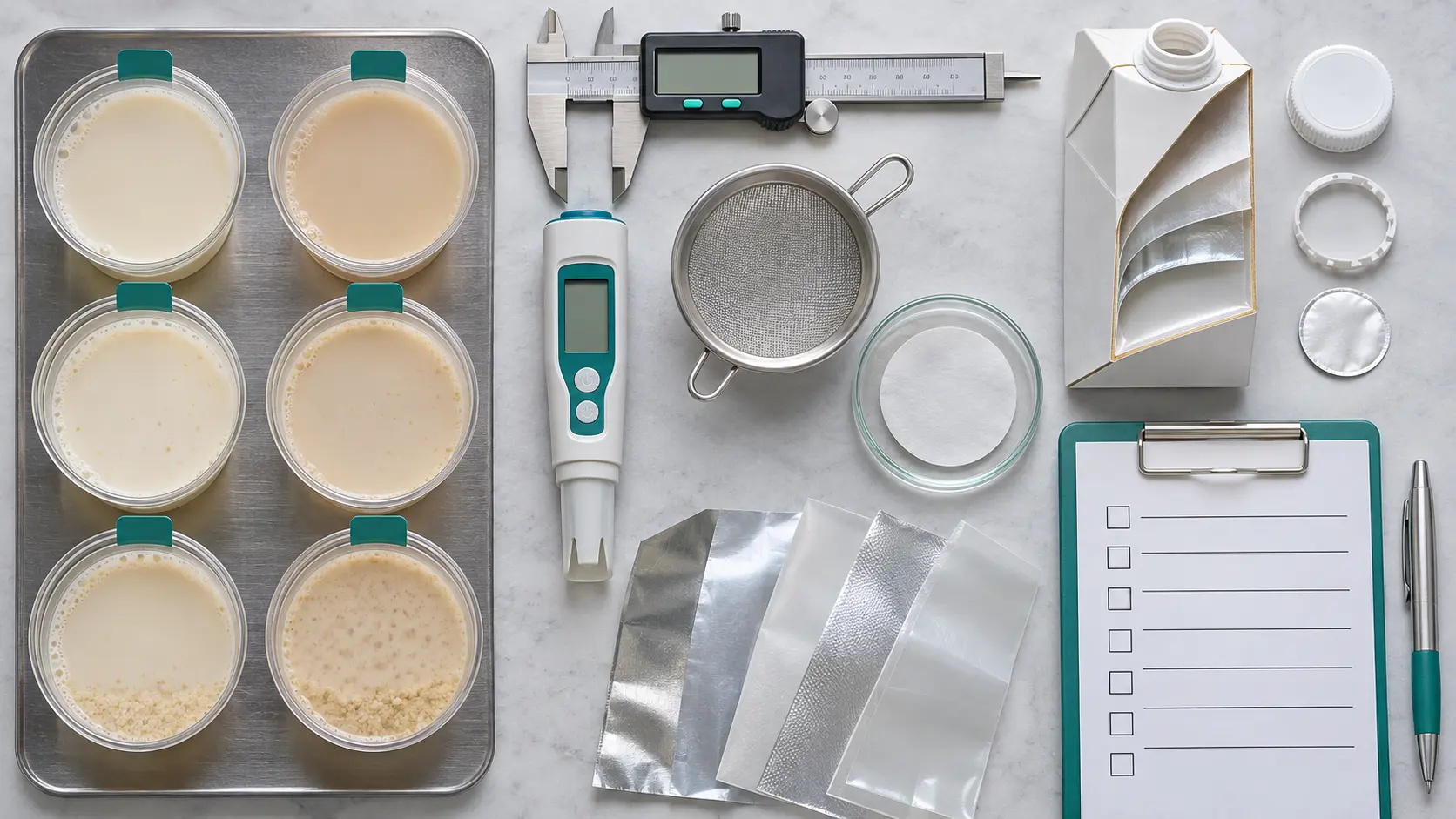
Agree the shelf-life protocol before comparing dates. It should identify production lots, storage conditions, checkpoints and acceptance criteria for commercial sterility or microbiological safety as applicable, package integrity, separation, sediment, viscosity, colour, flavour and nutrient retention where claimed. Include opened-pack instructions and validation for the actual formula, pack and process. An accelerated study or a sample from another recipe is not, on its own, proof for the offered product.
Approve package, label and traceability together
Specify carton or bottle structure, oxygen and light protection, closure, induction or tamper evidence where applicable, seal checks, coding position, secondary case and transport testing. Request suitability evidence for the intended food contact under Regulation (EC) No 1935/2004. The final review under Regulation (EU) No 1169/2011 should cover legal name, ingredient and allergen presentation, net quantity, date marking, storage, use instructions, responsible operator, nutrition declaration, destination language and supported origin wording.
Link raw-material lots, formula and process version, packaging lots, line records, finished codes, retained samples and dispatch units. Regulation (EC) No 178/2002 establishes traceability duties across food businesses. Agree who can place a lot on hold, investigate a complaint and retrieve distribution records; do not treat a mock-up certificate or sample report as proof of current approval or shipment readiness.
Send one comparable plant-based drink RFQ
- Destination, channel, product identity, plant base, consumer use, pack format and storage after opening
- Controlled formula, ingredient specifications, permitted substitutions, additives and marked deviations
- Allergen map, cross-contact controls, cleaning evidence and destination-language declaration
- Fortification sources, targets, tolerances, methods, stability basis and claim substantiation
- Process flow, HACCP controls, hold-and-release, shelf-life protocol and acceptance criteria
- Food-contact pack evidence, closure and seal checks, coding, case format and transport test
- Quantity, named delivery place, price basis, minimum order, lead time, validity and commercial exclusions
Require every bidder to answer on the same sheet and keep technical acceptance separate from commercial comparison. Use the comparable export quote guide for delivery terms and inclusions. Send the completed brief through the Marnivo inquiry form for a case-specific sourcing review.