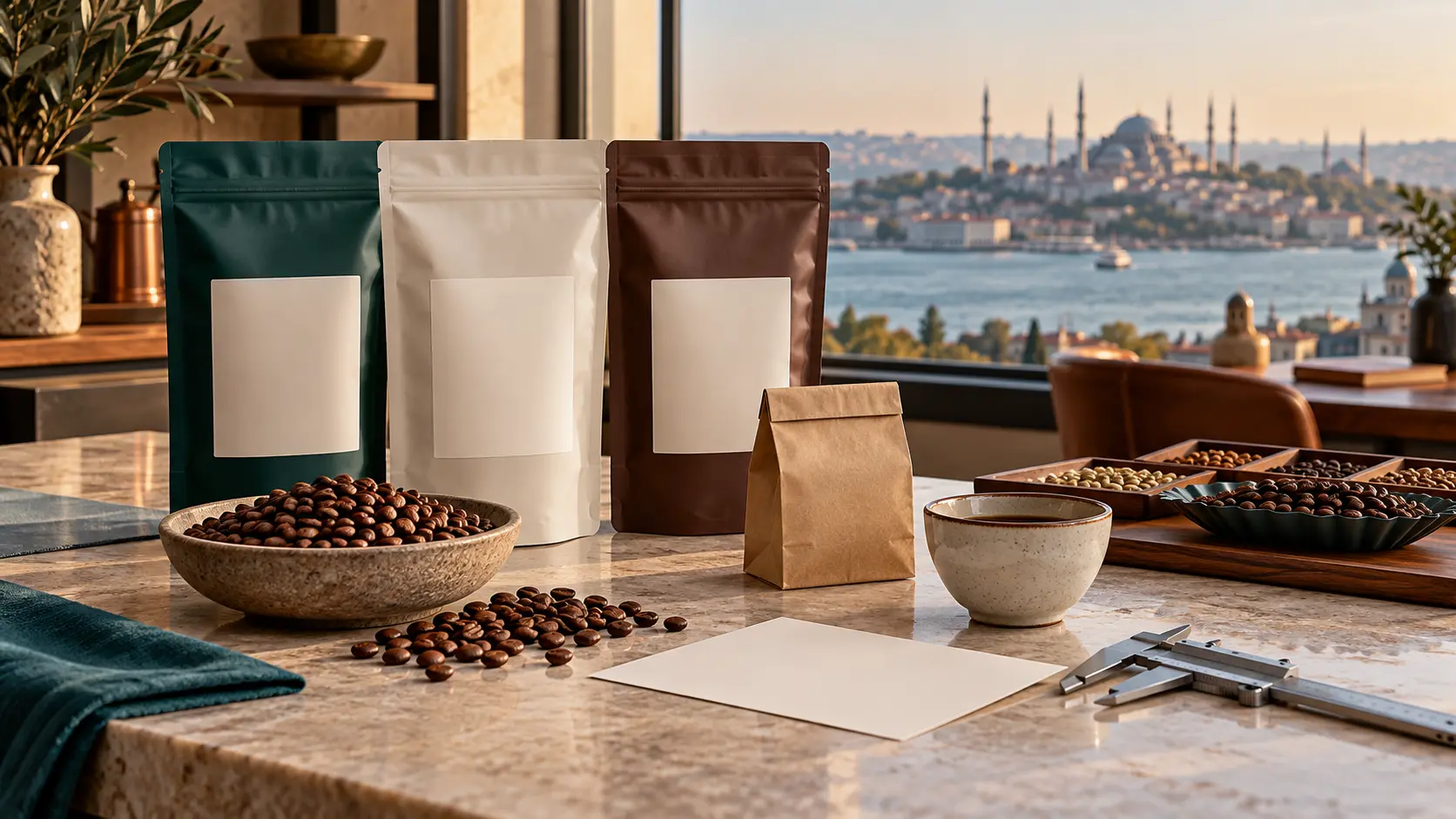
Define the coffee, and separate roasting country from bean origin
“Private-label coffee from Türkiye” is not yet a comparable buying unit. State whether the item is whole bean or ground, the intended brewing method, target roast character, retail or foodservice pack, net weight, units per case, destination and forecast volume. Identify whether the offer is a single origin or blend and request the species, component proportions and agricultural origin for every component.
Record where green coffee was grown separately from where it was blended, roasted and packed. A Turkish roaster can manufacture a product in Türkiye, but that fact does not establish the origin of the coffee beans. The beverage buyer page places coffee within a wider sourcing programme, while the private-label workflow helps assign specification, artwork, sample and change approvals. Confirm actual availability, minimum order, lead time, certifications and price only for the named factory and SKU.
Freeze one specification and a repeatable sample method
Ask for a version-controlled blend sheet, acceptable origin substitutions, green-bean grade inputs and the controls used before roasting. Translate “light”, “medium” or “dark” into an approved reference: appearance range, roast-loss method, sensory profile and any instrumental colour method the parties agree to use. For ground coffee, add the brewing application, grind distribution and tolerance. Define how the roaster manages roast changeover, rework, foreign material and traceability from incoming lot to finished pack.
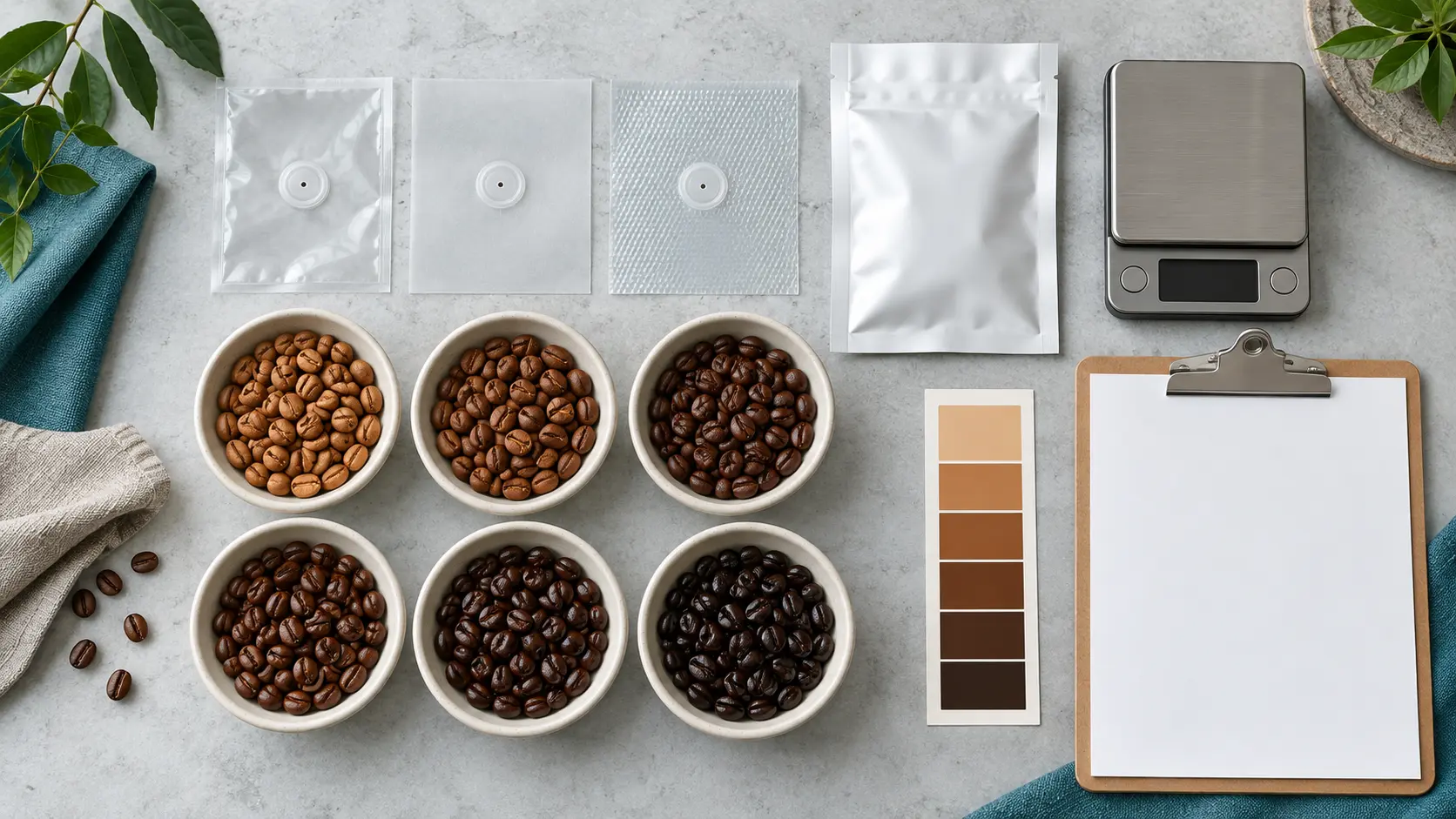
Compare production-relevant samples using one written preparation and tasting protocol. Fix dose, water, temperature, contact time, grinder and evaluation order; record aroma, acidity, sweetness, bitterness, body, aftertaste and visible defects without turning preferences into safety claims. Keep sealed references with blend revision, roast date, lot and pack structure. Agree which change—origin, blend ratio, roast profile, grind, site or packaging—requires a new sample and written approval.
Match the safety file to the offered lot
Regulation (EC) No 852/2004 frames food-hygiene and HACCP-based procedures. Request a product-specific hazard review, supplier approval, pest and foreign-material controls, cleaning records, traceability and a written hold-and-release rule. Do not treat a generic factory certificate as the release evidence for every coffee and lot.
Regulation (EU) 2023/915 contains maximum levels for ochratoxin A in relevant roasted and soluble coffee categories. Have a competent adviser identify the applicable entry for the exact product. Define who samples, the lot represented, method, laboratory scope, reporting limit and action after a non-conforming result. Implementing Regulation (EU) 2023/2782 provides official-control sampling and analysis rules for mycotoxins, including coffee products; use it when designing a defensible plan rather than accepting an unmatched report.
Build the bean-origin data chain before the EUDR gate
Coffee is within the commodity scope of Regulation (EU) 2023/1115. The European Commission’s current implementation page states application from 30 December 2026 for large and medium operators and 30 June 2027 for micro and small operators, with a separate date noted for small operators already covered by the timber rules. Because role, size, product code and supply-chain position change the duties, obtain case-specific advice instead of copying a deadline into the purchase order.
Ask the EU operator to map the information it needs to the coffee lots: producing country, plots or geolocation data, harvest or production period, supplier chain, quantity and the identifiers that connect the finished roast to the relevant due-diligence record. Agree who transmits which data, when, in what format and how corrections propagate. Roasting or packing in Türkiye does not replace agricultural-origin evidence.
Approve destination artwork, pack performance and shelf life
Build artwork from the approved recipe and destination. Regulation (EU) No 1169/2011 governs mandatory food information, language and origin or provenance presentation where applicable. Check legal name, net quantity, responsible operator, date marking, storage and use instructions, nutrition declaration status, claims and destination-language text with the responsible food business. Verify lot identification under Directive 2011/91/EU.
Specify the actual laminate, oxygen and moisture barrier, valve where used, seal window, coding area, case and pallet. Request food-contact evidence for the real structure and use conditions under the framework led by Regulation (EC) No 1935/2004. Validate seal integrity, valve performance, aroma retention and shelf life on the approved coffee and final pack; a result from another roast or pouch is not automatically transferable. State minimum remaining shelf life at dispatch or arrival and the decision process for damaged or swollen packs.
Send one comparable roasted-coffee RFQ
- Whole bean or ground, brewing use, pack format, destination and annual estimate
- Species, each component’s agricultural origin, blend ratio and substitution rule
- Roast reference, sensory method, grind distribution and reapproval triggers
- Lot traceability, hazard plan, OTA sampling, method, laboratory and release rule
- EUDR role review, geolocation and supply-chain data handover responsibilities
- Artwork languages, food-contact file, valve and seal validation, shelf-life protocol
- Quantity, named delivery place, price basis, minimum order, lead time and validity
For a simple comparison example, 12 packs of 500 g equal 6 kg net coffee per case. Compare the case price only after the blend, roast, pack and delivery basis match. Require every bidder to mark deviations on the same sheet. The comparable export quote guide structures commercial inclusions; share the completed brief through the Marnivo inquiry form for a case-specific sourcing review.