Define the product and buying unit before asking for price
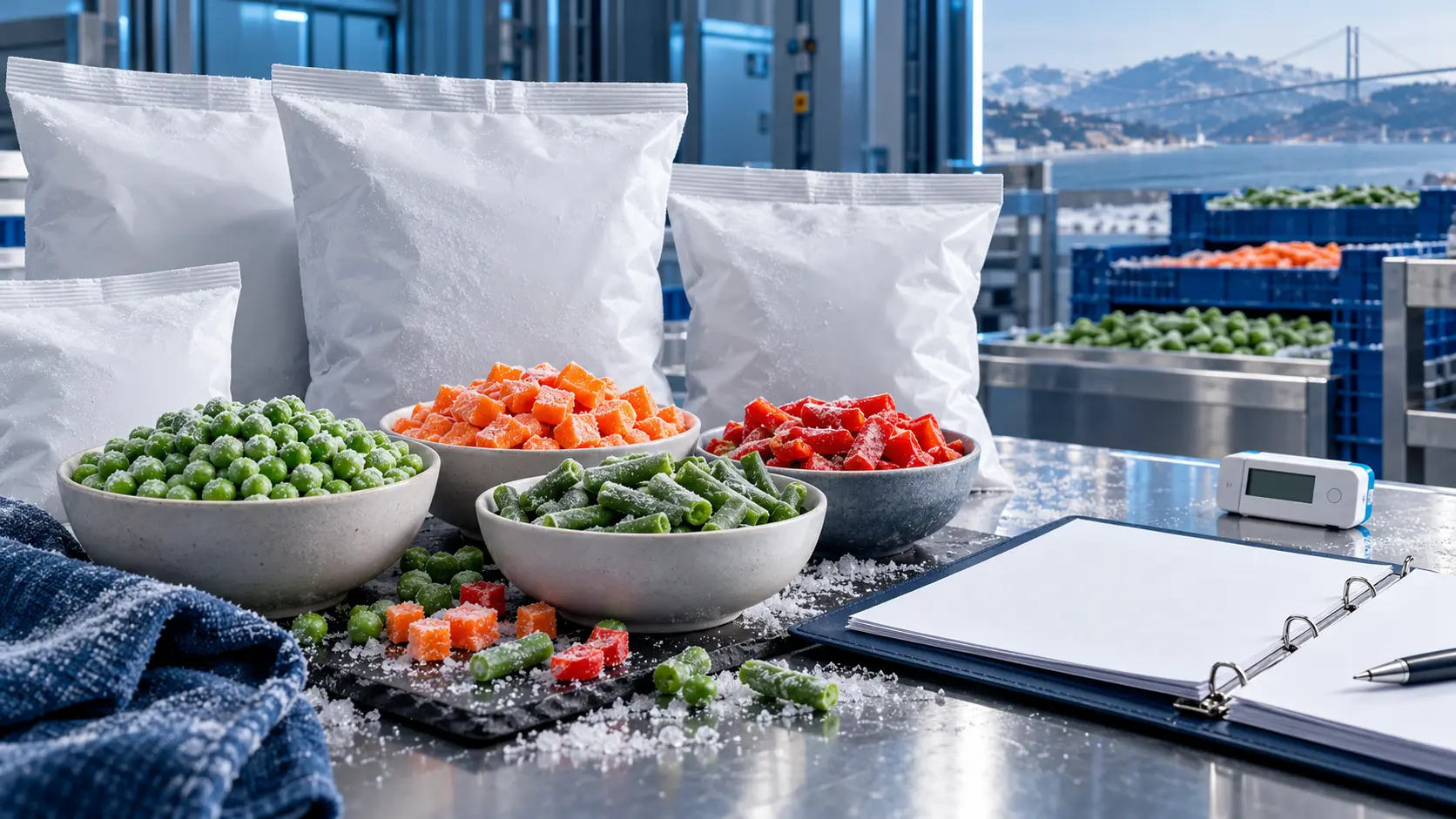
“Frozen vegetables” is not a complete quotation unit. State the vegetable or blend, variety if relevant, cut and target dimensions, maturity, colour, permitted size distribution, blanching status, and whether it will be sold as a retail pack or used as an ingredient. Fix net weight, units per case, pallet pattern, destination and intended use.
Create one brief for every recipe and pack format. Record the acceptable range for broken pieces, clumps, loose ice, field material, defects and sensory condition after the stated cooking method. The grocery staples buyer page places frozen vegetables within the wider food programme, while the private-label workflow assigns specification, artwork, sample and change approvals. A catalogue image does not prove stock, price, minimum order, capacity, certification or delivery time; confirm each point in writing for the named factory and SKU.
Fix the process, sample and physical specification
Request a process flow that identifies receiving, washing, trimming, cutting, blanching where used, cooling, quick-freezing, sorting, foreign-material controls, blending, packing and frozen storage. Link every critical parameter and release check to the offered product rather than accepting a generic plant presentation. Ask how the plant separates varieties, allergens and rework, and how a finished lot is traced to farms, incoming lots, production time and packaging lot.
Approve a production-relevant sample against a written sheet. Measure the agreed cut dimensions and size distribution, assess colour and texture after the specified preparation, and record the method for counting defects, clumps and foreign material. Retain a sealed reference with item code, recipe revision, production lot, date and pack material.
Build a product- and origin-specific safety plan
Food-business operators are responsible for hygiene controls, and Regulation (EC) No 852/2004 requires procedures based on HACCP principles where applicable. Ask the processor to map hazards to the real crop, water, field practices, process and intended use. Define microbiological specifications, sampling, methods, laboratory and decision rules with a competent technical adviser. Regulation (EC) No 2073/2005 sets criteria for specified food–microorganism combinations; check whether a criterion applies to the exact product and use instead of copying a generic panel.
Pesticide-residue decisions should use the crop and current residue definition under Regulation (EC) No 396/2005 and the official EU Pesticides Database. State the sampling basis, laboratory scope and action for a non-conforming result. Add contaminant, foreign-material and environmental-monitoring controls after a product-specific risk review.
Verify the quick-freezing and cold-chain evidence
The term “quick-frozen” has a specific EU framework. Directive 89/108/EEC defines the process and requires the product, after thermal stabilisation, to be maintained at −18 °C or lower at all points, subject to the stated limited tolerances in distribution. Confirm that the offered product and route fit that scope. Request the freezing method, product-core verification, cold-store set points, loading procedure and written action when temperature deviates.
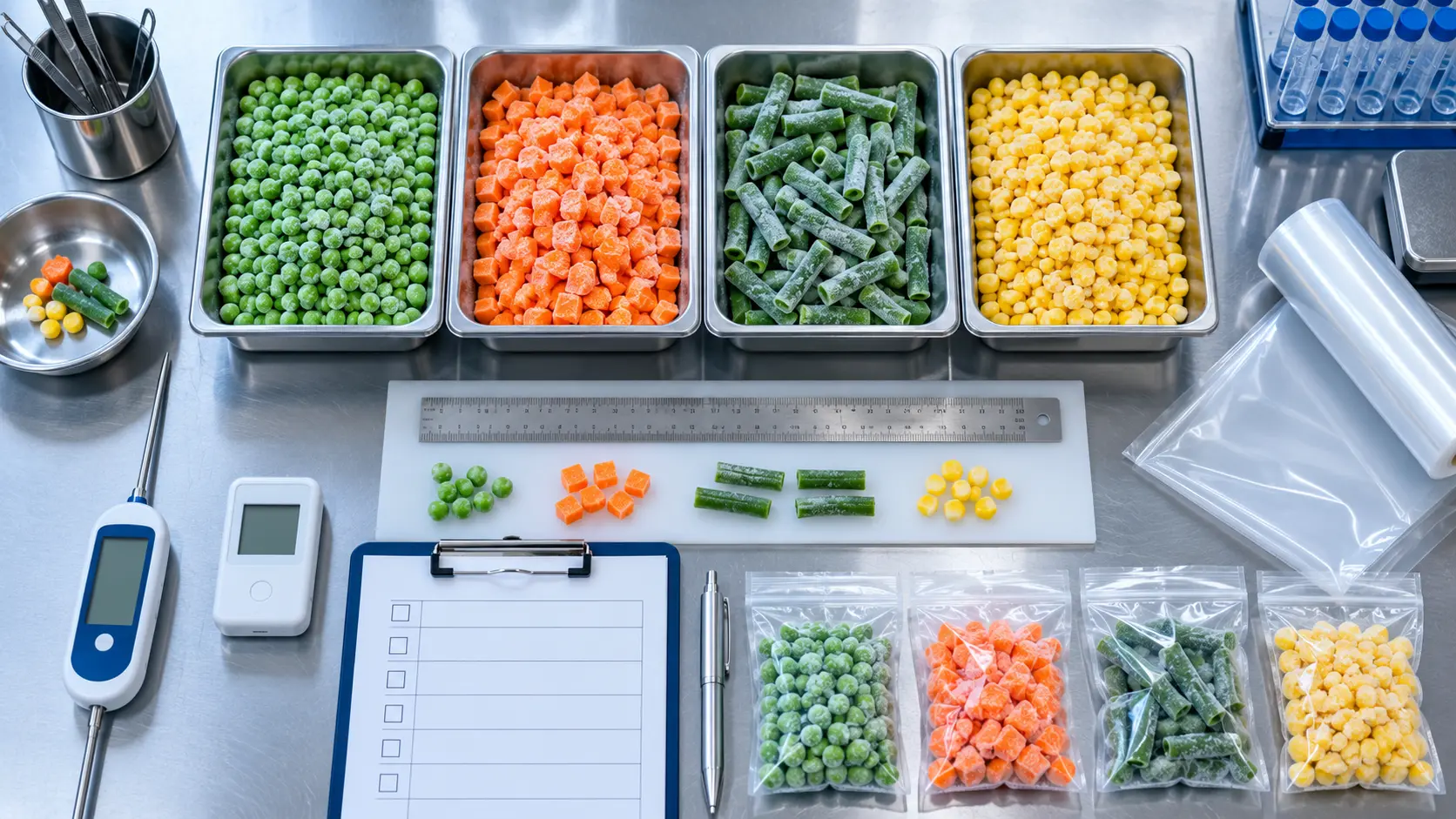
Regulation (EC) No 37/2005 addresses temperature monitoring in transport, warehousing and storage of quick-frozen foodstuffs. Define who supplies calibrated loggers, where sensors are positioned, which records travel with the lot, who reviews them and what triggers a hold. A reefer set point is not evidence of product history; review time-stamped records and seal information for the actual consignment.
Approve the destination label and final pack
Build artwork from the approved recipe, process and destination. Regulation (EU) No 1169/2011 frames mandatory food information and allergen presentation. Check the legal name, ingredients for a blend, net quantity, date marking, storage and preparation instructions, responsible operator, nutrition information where required and destination-language text. The quick-frozen framework also contains product-specific labelling particulars, while lot identification should be checked separately under Directive 2011/91/EU and destination implementation.
Specify the actual film structure, seal window, puncture resistance, moisture barrier, print, coding area, case and pallet. Food-contact materials must suit the food and intended frozen and cooking conditions under the framework led by Regulation (EC) No 1935/2004. Request the compliance file for the real material structure. Validate seal integrity, net quantity, pack handling and shelf life with the final product, process and pack.
Send one comparable quick-frozen-vegetable RFQ
- Vegetable or blend, variety, cut, dimensions, blanching status, intended use and destination
- Defect, broken-piece, clump, loose-ice, foreign-material and sensory acceptance methods
- Process flow, farm and lot traceability, rework rule, allergen segregation and change notice
- Microbiological, pesticide-residue and contaminant plan with sampling and decision rules
- Quick-freezing method, core-temperature evidence, logger ownership and deviation action
- Production sample, retained reference, final artwork languages and reapproval triggers
- Final film, seal validation, food-contact file, coding, case, pallet and shelf-life protocol
- Volume, destination, named Incoterms® place, price, minimum order, lead time and validity
Require every bidder to complete the same sheet and mark deviations. The comparable export quote guide structures commercial inclusions and validity. Use the Marnivo inquiry form to share the product, destination, pack and cold-chain brief for a case-specific review.