Define format, function and destination first
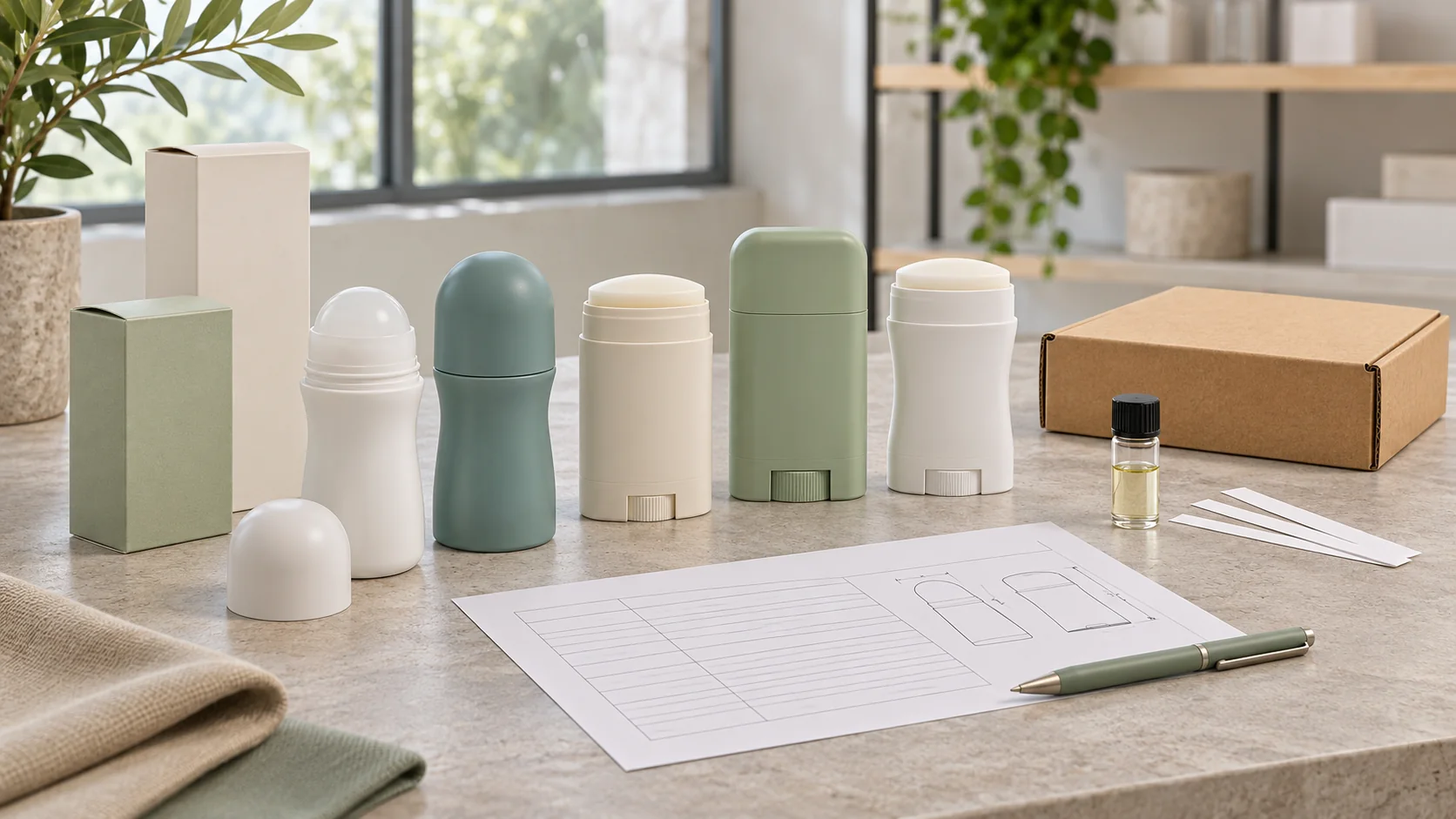
Begin with a precise cosmetic brief rather than a request for a generic deodorant. State whether the project is a roll-on liquid, gel or solid stick; the intended user and application area; fragrance position; pack size; channel; destination countries; and required languages. This guide covers non-aerosol formats only. If a bidder proposes a spray or pressurised pack, separate it because the formula, packaging, transport and regulatory review change.
Clarify whether the intended function is odour control, antiperspirant performance or both, and keep medical or therapeutic language outside the brief unless a qualified reviewer has confirmed the category and evidence. A Turkish manufacturing address does not prove ingredient origin, EU compliance, current stock or shipment readiness. Use the personal-care buyer page to frame the category and the private-label workflow to assign sample, artwork and change-control decisions.
Freeze one controlled formula for comparison
Ask each bidder for the proposed INCI list, quantitative formula or agreed disclosure level, raw-material specifications, supplier references, fragrance code, preservatives, colourants, deodorising or antiperspirant actives and permitted substitutions. Record the carrier system, pH target and range, viscosity or stick hardness, application feel, drying behaviour and residue expectations. Review every substance and concentration against the current annexes of Regulation (EC) No 1223/2009; a familiar trade name or CosIng entry is not approval for every use.
Make change control explicit. A new fragrance, active level, preservative, supplier, colour, ball material, gasket, stick mechanism or pack resin can affect the safety assessment, stability, compatibility, label and claim file. Require written notice, technical review and approval before substitution. Keep fragrance-free, alcohol-free or sensitive-skin variants separate from the base offer so materially different products are not compared under one description.
Map the EU safety file and notification route
Before the finished product is placed on the EU market, an EU-established responsible person must ensure compliance, including a cosmetic product safety report prepared by a suitably qualified assessor and an available product information file. The file links the product description, safety report, manufacturing method and good-manufacturing-practice statement, evidence for claimed effects and relevant animal-testing data. Request the proposed owner, location, inputs and update route for each element instead of treating a sample certificate as the completed file.
The final formula also requires notification through the Cosmetic Products Notification Portal under Article 13. CPNP is a notification system, not an approval mark. Agree who submits, when formula, label and packaging images are locked, and how later changes are assessed. Destination-language artwork review should cover the responsible-person address, nominal content, durability or period-after-opening information as applicable, precautions, batch reference, product function where needed and ingredients.
Separate deodorant claims from proof
List proposed claims before sample testing: for example odour-control duration, antiperspirant performance, quick drying, no white marks, sensitive-skin positioning, dermatological testing, alcohol-free wording or ingredient benefits. Regulation (EU) No 655/2013 requires claims to meet common criteria including truthfulness, evidential support, honesty, fairness and informed decision-making. Basic legal compliance must not be presented as a special advantage.
For each claim, define the exact wording, target population, test or documentary method, conditions of use, acceptance criterion, reviewer and artwork version. Ingredient literature alone does not prove that the finished product achieves the same effect. Review the current fragrance-allergen entries and transition rules against the final formula and artwork; for leave-on products, Regulation (EU) 2023/1545 uses the relevant individual-labelling threshold specified in its amended entries. Do not copy another product's ingredient list.
Validate formula, pack and production controls together
Test the actual formula in the proposed roll-on or stick pack. Agree a stability and compatibility plan covering storage conditions, checkpoints, appearance, odour, pH where relevant, viscosity or hardness, phase separation, evaporation, leakage, ball rotation or stick travel, cap fit, fill mass, label adhesion and formula-pack interaction. Add microbiological quality and preservative-system evidence appropriate to the formula and safety assessment. Accelerated data or results from another pack are supporting information, not automatic proof.
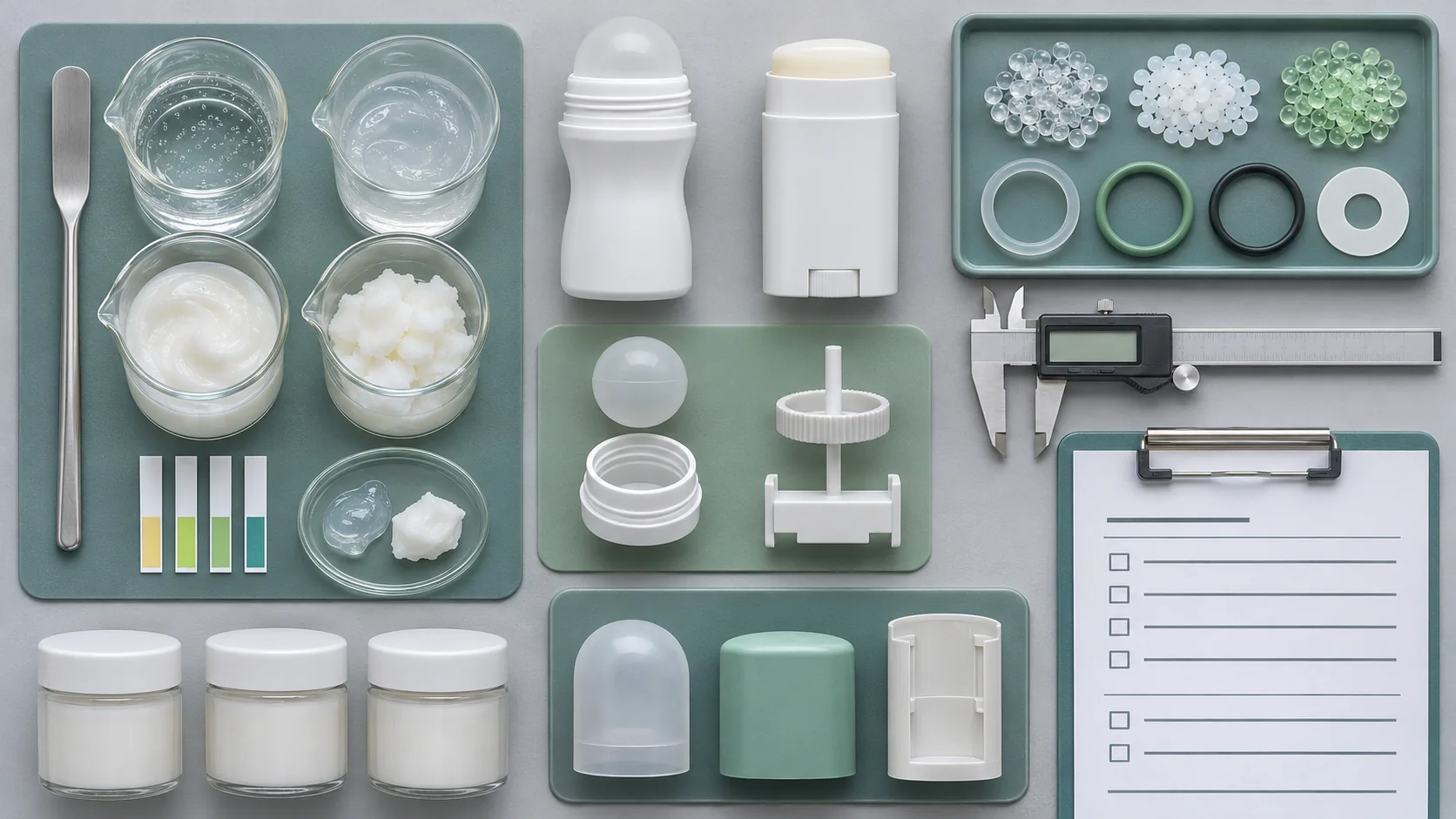
Request the manufacturing flow, batch scale, in-process checks, release specification, deviations, retained samples and traceability from raw-material and packaging lots to finished batch. Article 8 of Regulation (EC) No 1223/2009 requires manufacture to comply with good manufacturing practice. Ask for evidence of the system applied to the proposed site and product without converting a document request into an unsupported certification claim.
Send one comparable deodorant RFQ
- Destination, channel, roll-on or stick format, intended function, user, fill size and languages
- Controlled formula, INCI list, specifications, fragrance code, actives, restricted substances and substitutions
- EU responsible-person plan, safety assessor, product information file inputs and CPNP responsibility
- Exact claims, substantiation method, use conditions, acceptance criteria and approved artwork version
- Stability, compatibility, microbiological and preservative-system plan for the actual formula and pack
- Manufacturing controls, release specification, traceability, retained samples and change notification
- Quantity, named delivery place, price basis, minimum order, lead time, validity and exclusions
Require every bidder to answer the same sheet and keep technical acceptance separate from commercial comparison. Use the comparable export quote guide for delivery terms and inclusions. Send the completed brief through the Marnivo inquiry form for a case-specific sourcing discussion.