Start with the legal water category and the exact source
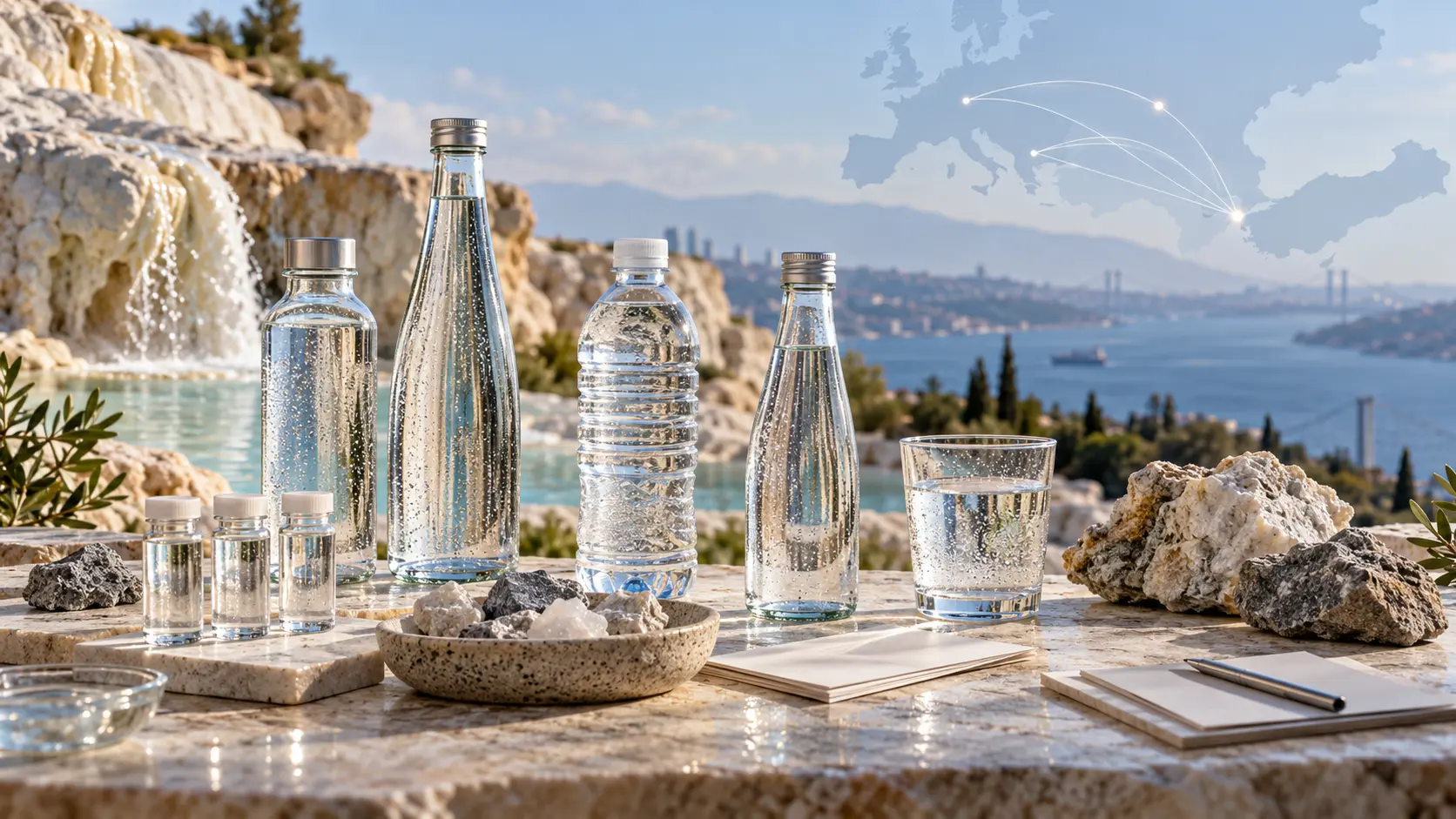
“Bottled water” is not one specification. Under Directive 2009/54/EC, natural mineral water is a defined category tied to an underground source and official recognition. Spring water and other drinking water follow different rules. For a Turkish offer intended for the EU, ask for the source name, spring or borehole, place of exploitation, bottling site, recognising authority, decision reference and destination-market acceptance. Do not infer EU eligibility from a brand name, mineral analysis or domestic permit alone.
Keep the source and packer identities separate. Record whether bottling occurs at the source, who owns the private-label artwork and which operator will be responsible in the destination market. The beverage buyer page gives category context, while the private-label workflow assigns specification, artwork, sample and change approvals. Availability, recognition, minimum order, lead time and price still require confirmation for the named offer.
Freeze the composition and control plan
Request a current full analysis and the source's historical range, not one attractive mineral figure. Map major ions, trace constituents, microbiology, sampling point, method, laboratory scope, sample date and reporting unit. Directive 2003/40/EC sets limits and labelling rules for certain constituents of natural mineral waters. A competent adviser should match the exact water and destination to the current requirements rather than copying limits from a competitor's label.
Define incoming and release controls from source to filled bottle: source monitoring, line hygiene, container inspection, fill volume, cap application, coding, retained samples, non-conformance handling and lot release. The general hygiene framework in Regulation (EC) No 852/2004 and traceability framework in Regulation (EC) No 178/2002 help structure the file. Ask for records from the offered source, line and pack, not a generic quality presentation.
Map every treatment and claim before artwork
Natural mineral water is not an unrestricted processing category. List filtration, air treatment, carbon dioxide addition or removal and every other process exactly as performed. Check each step against Directive 2009/54/EC and, where relevant, Directive 2003/40/EC before using “natural”, “untreated” or similar wording. If ozone-enriched air is used for authorised constituent removal, the specific conditions and label statement must be assessed; an equipment list is not proof that a process is permitted.
Also freeze still, naturally carbonated, carbonated or CO₂-reinforced presentation with supporting source and process data. Keep mineral, wellness and nutrition claims outside the artwork until a qualified reviewer confirms the wording, evidence and destination-language conditions. The buyer should approve a claims register showing the claim, legal basis, evidence owner, language and expiry or review date.
Approve the actual bottle, cap and transport unit
Specify glass or plastic resin, recycled-content declaration where relevant, bottle drawing, neck finish, cap and liner, tamper evidence, colour, nominal volume, tolerances, date/lot coding area, case and pallet. Request food-contact compliance documentation for the actual bottle-cap-label system. The Commission's food-contact materials page links the framework led by Regulation (EC) No 1935/2004, GMP rules and specific measures such as Regulation (EU) No 10/2011 for plastics.
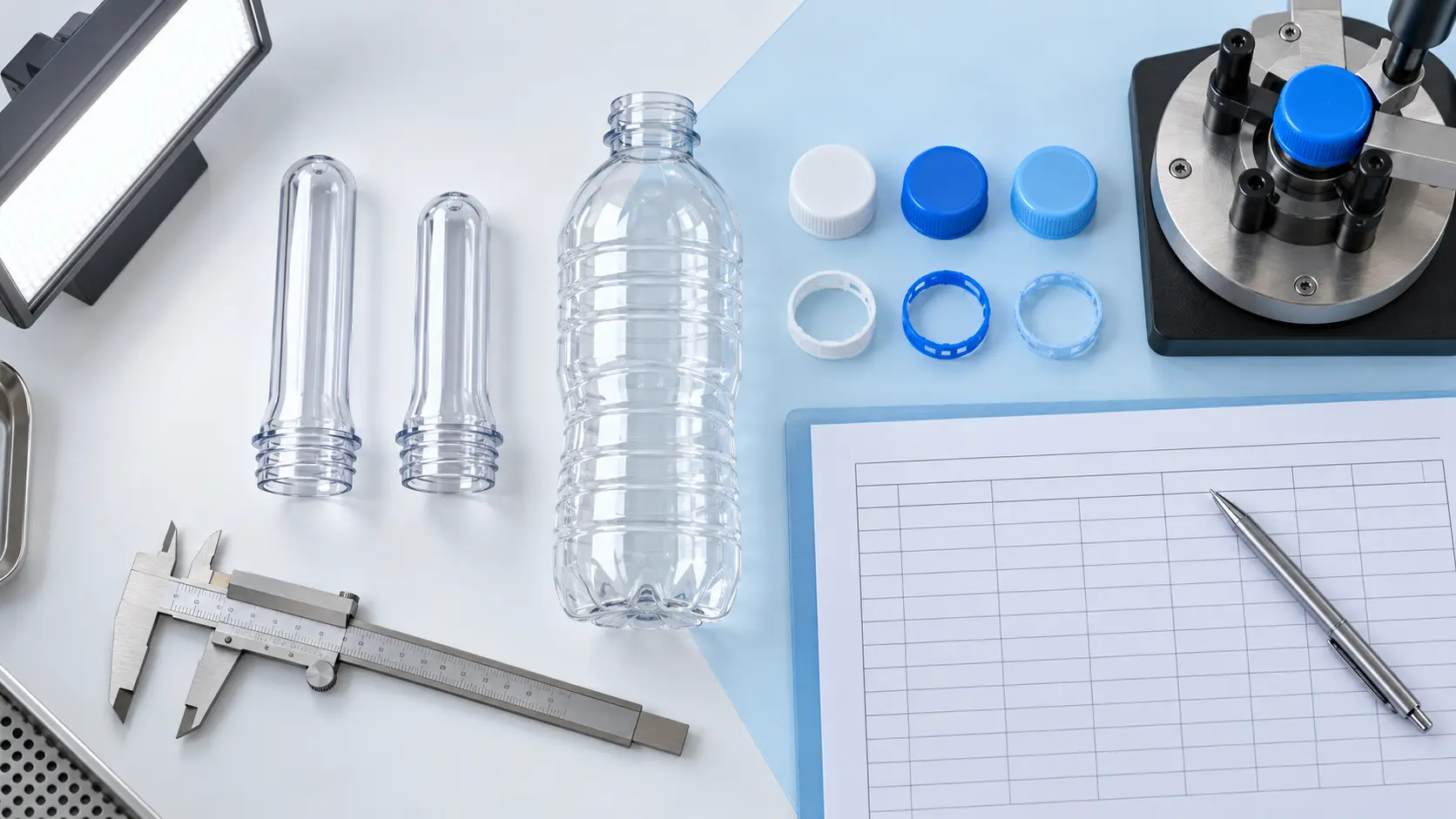
Agree pack tests before scale-up: cap torque and removal, seal integrity, leak, top load, drop or vibration as appropriate, label adhesion, pallet stability and storage or transport exposure. Record the sample size, conditioning, acceptance limits and owner. A migration declaration for one resin or a successful test on another neck finish does not automatically cover the offered system.
Build destination artwork and the PPWR file together
Create artwork from the recognised source file and approved pack. Check the sales description, source and place of exploitation, analytical composition, any required treatment statement, responsible operator, net quantity, lot/date information, storage directions, barcode and destination languages. Apply the general consumer-information framework in Regulation (EU) No 1169/2011 alongside the water-specific rules; obtain destination advice before print approval.
Regulation (EU) 2025/40 on packaging and packaging waste applies from 12 August 2026, with provisions and transitions that depend on the pack, operator role and market. Add pack composition, weights, supplier declarations, recyclability evidence, markings and responsibility allocation to the approval file. Do not promise compliance from a bottle photograph or recycled-content claim; review the placed-on-market date and exact pack with qualified packaging and legal specialists.
Send one comparable natural-mineral-water RFQ
- Legal category, source name, spring or borehole, recognition reference and destination check
- Bottling site, packer, source-to-bottle flow and change-notification rule
- Full analysis, historical range, microbiology, sampling plan and release authority
- Still or carbonated presentation, all treatments and evidence for every intended claim
- Bottle, resin or glass, cap, liner, tamper evidence, coding, case and pallet drawings
- Food-contact file, pack-test protocol, destination artwork and PPWR responsibility map
- Quantity, named delivery place, price basis, minimum order, lead time and validity
Ask every bidder to mark deviations on the same sheet and keep commercial terms separate from technical approval. The comparable export quote guide structures inclusions and delivery terms. Share the brief through the Marnivo inquiry form for a case-specific sourcing review.