Define the finished product before requesting a price
A mayonnaise quotation is comparable only when the buyer fixes the destination, sales channel, recipe position and pack. State whether the product is a standard mayonnaise, a reduced-fat formulation or another emulsified dressing; identify the destination countries and label languages; and specify retail, foodservice or industrial use. Do not let a familiar product name substitute for a controlled formula and destination review.
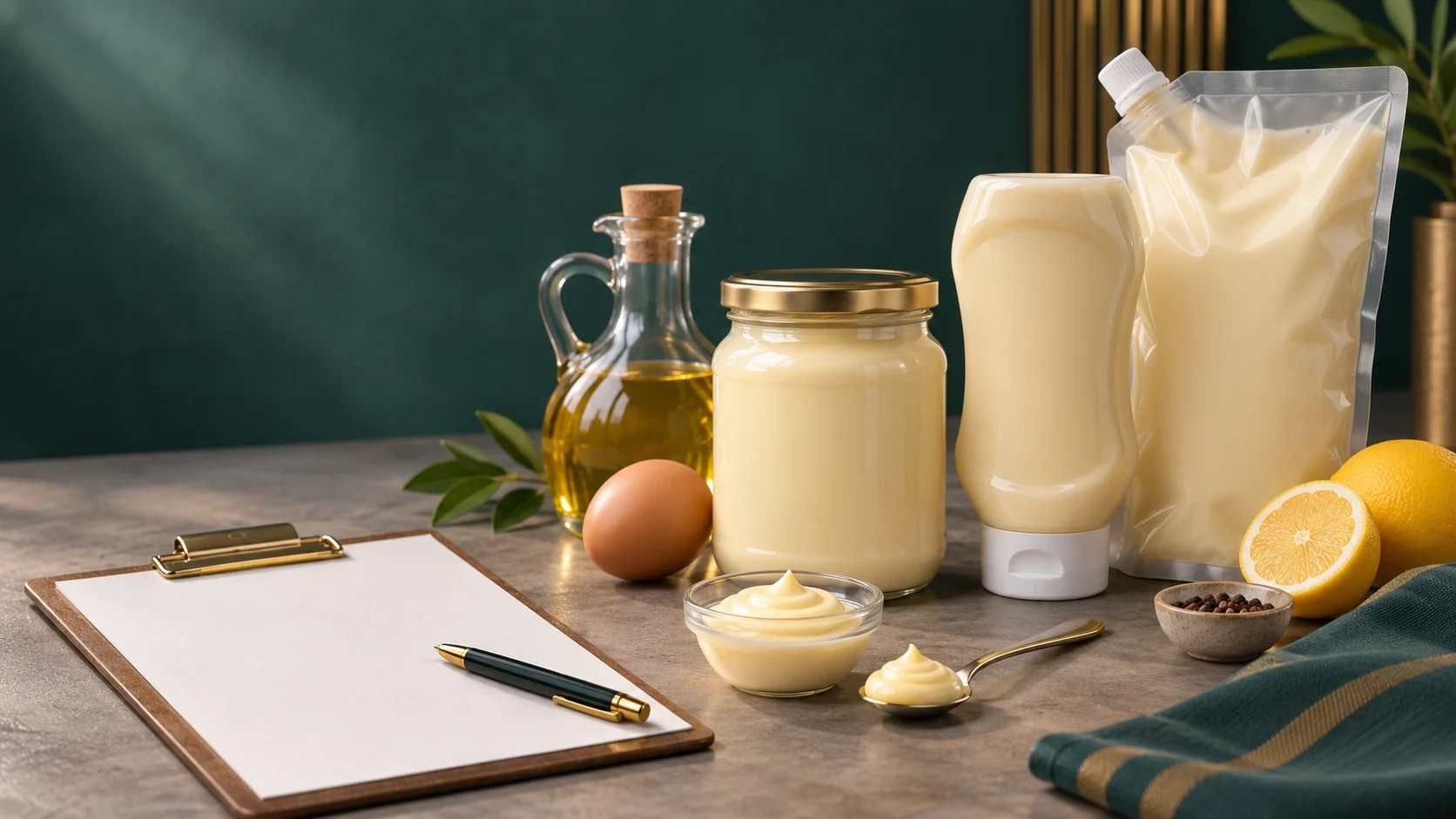
Describe the target pack—glass jar, plastic jar, squeeze bottle, sachet or foodservice pouch—together with nominal fill, closure, dispensing performance, secondary case and pallet constraints. Use the sauces and preserves buyer page to frame the category, then use the private-label workflow to assign responsibility for formula, artwork, evidence and approval.
Lock formula identity and change control
Request the complete proposed ingredient list in descending order, recipe code and revision, percentage or target range for the oil phase, oil identity, egg ingredient form, water, acids, salt, sugar, mustard or other flavouring ingredients, and every stabiliser, thickener, preservative or colour if used. Ask which materials may vary by origin or supplier and which substitutions require written buyer approval. The commercial specification should link the offered sample, label draft and production recipe to the same revision.
Egg is an allergen under EU food-information rules, and mustard may also require emphasis when present. Ask for the allergen matrix, cross-contact assessment and declaration logic for the final destination label. Keep optional positions—egg-free, reduced fat, organic, vegan or nutrition claims—outside the base comparison unless the evidence and final formula support them. A marketing phrase should never become a purchasing requirement without measurable criteria and a verified legal review.
Compare emulsion performance with one sample method
Evaluate coded samples at the same temperature and after the same conditioning time. Record appearance, colour, aroma, acid balance, salt perception, off-notes, gloss, spoon peak, spread, flow from the selected pack and residue after dispensing. Add a defined draw or flow test and, where relevant, a viscosity method agreed with the supplier. Numbers from different instruments, spindle settings or temperatures are not directly comparable.
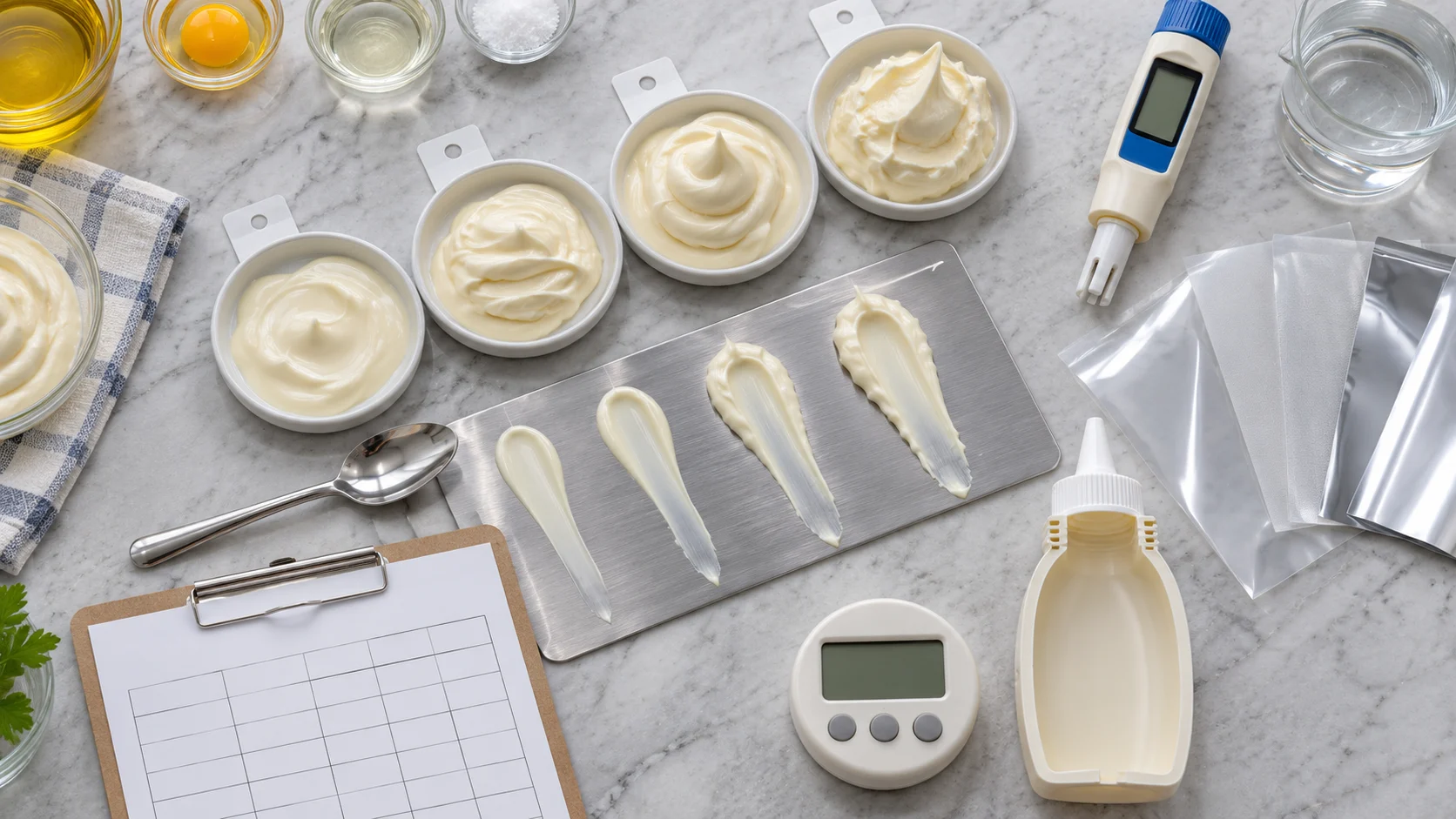
Test the product in its intended use as well as on its own: for example, sandwich spread, salad binding or foodservice dispensing. Recheck after opening and after a defined warm-cold handling cycle to look for oiling-off, water release, crusting, odour transfer or loss of dispensing control. Agree acceptance ranges, the signed reference sample and the rule for formula or process changes. A single attractive sample is not a shelf-life case.
Build the EU declaration from the final recipe
For EU sale, review the final food name, ingredient list, emphasised allergens, quantitative ingredient declarations where triggered, net quantity, date marking, storage and use instructions, responsible food business operator details, nutrition declaration and destination-language presentation against the current food-information regulation. Build the artwork from the released recipe rather than translating a Turkish label without checking its market-facing name and mandatory particulars.
Mayonnaise falls within the sauces category used by the EU additive framework. Verify each additive and its conditions of use for the exact food category and formula in the current consolidated regulation and Commission database; do not treat a supplier trade name as proof of permission. Keep claims review separate. The technical file should show why the proposed wording is supported, not simply repeat it across languages.
Validate packaging and shelf-life evidence together
Oil-rich emulsions can interact with oxygen, light, closure surfaces and dispensing components. Request the full packaging construction, closure or valve specification, tamper-evidence concept, coding location and food-contact documentation for the proposed materials. For plastic layers, confirm the applicable declaration and migration-supporting information for the intended food, contact time and temperature. A generic material certificate is not automatically the file for the offered pack.
Run filling and distribution trials with the final recipe and pack. Check fill accuracy, headspace, seal or torque, leakage, panel distortion, label adhesion, code legibility, squeeze recovery, valve cleanliness and case damage. The shelf-life plan should define storage conditions and checkpoints for sensory change, emulsion stability, oxidation indicators where justified, pack integrity and microbiological criteria selected by the responsible food business. Link retained samples and ingredient, packaging and finished-batch records so traceability can be demonstrated.
Send one RFQ matrix and keep price behind the technical gate
- Destination, channel, product position, use case and destination languages
- Recipe code, oil identity and target, egg ingredient, acids, seasonings, additives and change-control rules
- Allergen matrix, cross-contact review, final declaration and claim evidence
- Coded sample plan, sensory scorecard, draw or viscosity method, pack dispensing test and acceptance ranges
- Pack construction, closure, food-contact file, case and pallet configuration
- Shelf-life protocol, finished-batch release, retained samples, traceability and complaint records
- Quantity, named delivery place, price basis, minimum order, lead time, validity and exclusions
Ask every bidder to complete the same matrix and quote only the formula-pack combination that passed the technical review. Use the comparable export quote guide to align delivery terms and inclusions, then submit the controlled brief through the Marnivo inquiry form for a case-specific sourcing discussion.