Freeze the product identity
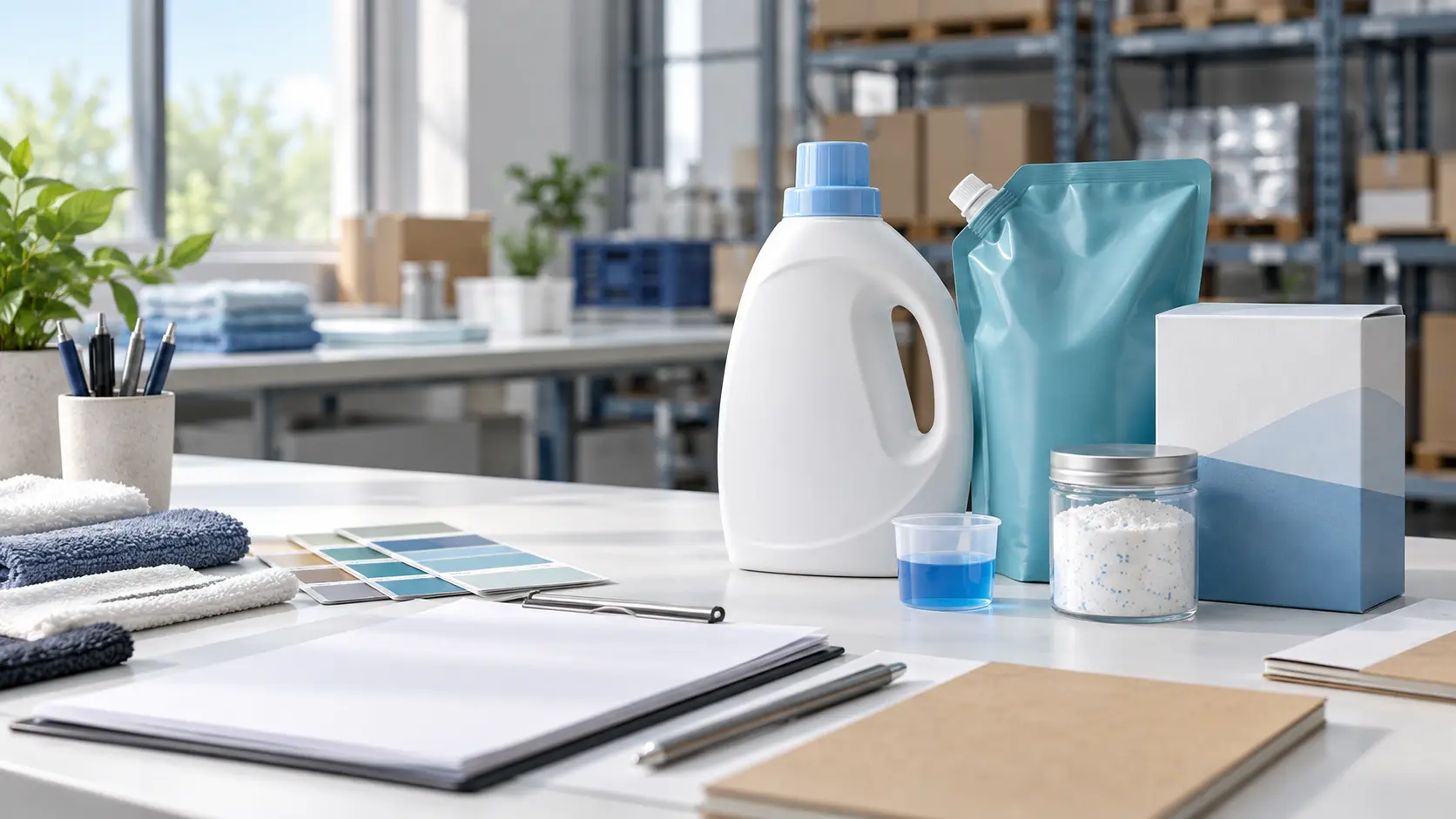
“Laundry detergent” is not a quote-ready specification. State whether the project is a liquid, powder, capsule or concentrated refill; whether it is for whites, colours, delicates or a defined general-purpose use; and whether the buyer expects fragrance-free, fragranced or another documented claim. Record the destination countries, consumer or professional use, pack size, number of washes, dosage basis, washing temperatures and target water-hardness range. Treat fragrance, colour, viscosity, density and pH as proposed values until the approved formula and test method identify them.
Separate the product brief from the commercial offer. Our cleaning-products sourcing overview helps frame the category, while the private-label process guide covers artwork and approval gates. Neither page confirms current stock, minimum order, certification or delivery time.
Map the current and future EU rules
On 10 October 2026, Regulation (EC) 648/2004 remains the operative EU detergents framework. Regulation (EU) 2026/405 is already in force but, apart from specified provisions, applies from 23 September 2029 and repeals Regulation 648/2004 from that date. Its transition rules also address products placed on or made available to the market around the changeover. A buyer should therefore validate the launch date and market status rather than describing the future digital product passport as a current 2026 label obligation.
Detergent rules do not replace the EU classification, labelling and packaging framework. The final mixture must be assessed under Regulation (EC) 1272/2008 (CLP). Where classification and composition trigger poison-centre notification requirements, the responsible operator should establish the notification route and UFI before artwork approval. Confirm the EU economic operator, destination languages and national poison-centre arrangements with a qualified adviser; do not copy a UFI or hazard label from another formula.
Request a version-controlled evidence pack
Ask for one dossier tied to the exact formula code and revision. It should identify the manufacturer and manufacturing site, ingredient and surfactant information needed for regulatory review, the classification rationale, label elements, safety data sheet where required, detergent-ingredient data, and evidence supporting applicable surfactant biodegradability requirements. Add packaging specifications, batch coding, change-control contacts and the records used to substantiate performance or environmental claims.
Every document needs a date, version, product link and owner. A supplier certificate, a product test and an operator notification answer different questions; none proves the others. Require written notice before changes to formula, fragrance, raw material source, manufacturing site, pack or artwork. The importer should define which changes require fresh classification, notification, testing or approval.
Approve artwork and packaging
Build a destination-by-destination artwork matrix. Check product identifier, responsible operator details, nominal quantity, ingredient and fragrance-allergen information required by the applicable detergents rules, use and dosage instructions, batch traceability and the CLP elements resulting from the final classification. Consumer laundry dosage information should reflect the chosen format, water hardness and load assumptions. Mandatory information must be legible and in the language or languages required by the destination Member State.
Test the actual bottle, closure, pouch, carton and label with the approved formula. Record leak, drop, transport, storage and label-adhesion protocols appropriate to the pack. Child-resistant fastening or tactile warnings are not universal detergent features; assess them only where the CLP criteria make them applicable. A blank mock-up can approve layout, but production artwork should not be released until the formula, operator data and regulatory text are frozen.
Define a repeatable performance plan
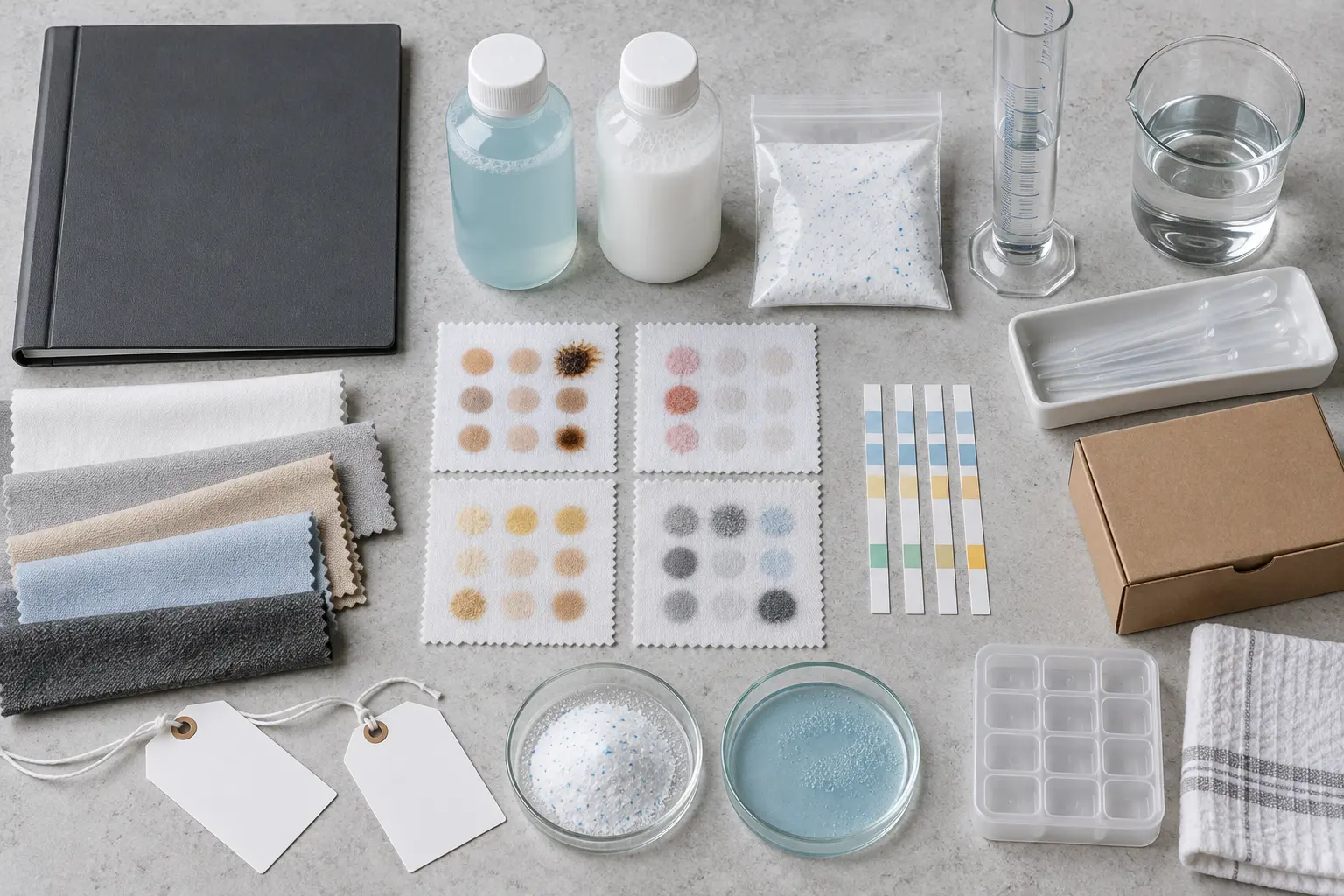
Translate “powerful cleaning” into an agreed comparison. Name the fabric type, stain set, stain ageing, wash programme, temperature, water hardness, dosage, load and reference product. Define how cleaning, whiteness, colour care, fragrance or rinse performance will be scored and who may repeat the test. If the label carries a quantified or environmental claim, obtain evidence designed for that exact wording and market.
Approve samples in stages: packaging compatibility first, then laboratory or controlled wash performance, then a pilot made with the intended formula and pack. Identify every sample with formula revision, batch, fill date and pack revision, and retain sealed counter-samples. A hand-prepared sample may guide development but should not be represented as proof of routine production.
Send one comparable buyer checklist
Send every candidate the same request: product format and use; destinations and languages; proposed formula code and revision; CLP classification and label proposal; notification and UFI responsibility where applicable; detergent-rule data; pack and closure specification; dosage basis; performance protocol; sample stages; change control; commercial pack configuration; Incoterms® rule and named place; lead time; and the values still awaiting confirmation.
A practical instruction is: “Quote the attached EU private-label laundry-detergent brief. Return the completed formula-and-artwork responsibility matrix, versioned evidence index, packaging specification and proposed test plan. Separate confirmed values from options, and do not change formula, site, fragrance or pack without written approval.” Use the export quote request guide for the commercial comparison. Price, minimum order, stock, certificate scope and delivery timing must be confirmed for the real inquiry.