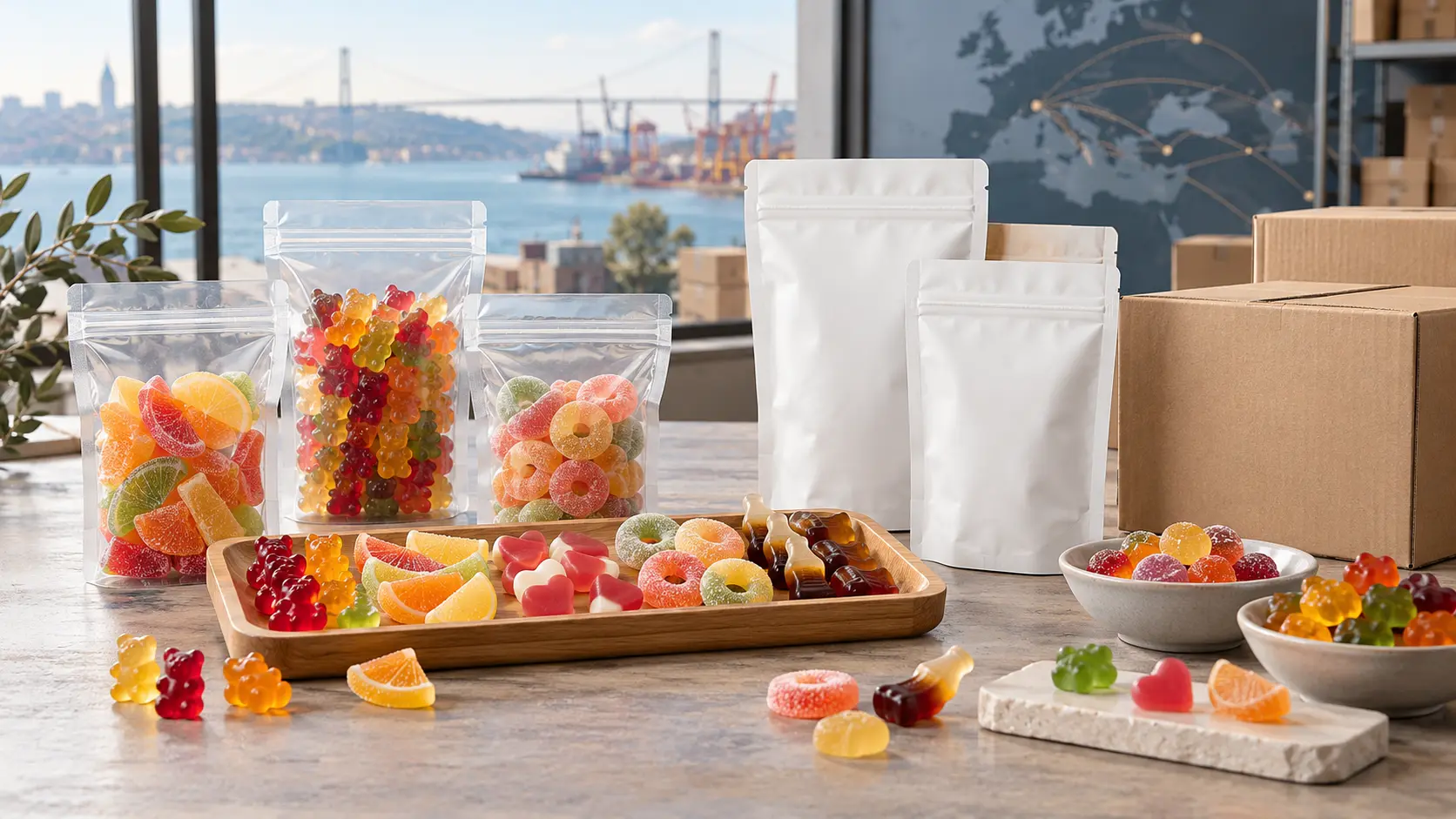
Define the confectionery before comparing offers
Begin with the product the buyer actually intends to sell: a soft gummy or chewy candy, its shape and piece weight, sugar or sour coating, flavour direction, colours, serving pack and destination channel. Record whether the brief calls for a gelatin, pectin, starch or blended gelling system and whether vegetarian, vegan, halal, nutrition or health statements are proposed. These are separate specification and evidence questions; a supplier's generic catalogue description does not establish the status of the finished SKU.
Ask every bidder to complete one controlled product sheet with the intended recipe, ingredient specifications, target piece dimensions, pack format and change-notification rule. The snacks and confectionery buyer page places the item in the wider range, while the private-label workflow helps assign ownership for formula, artwork, samples and approvals.
Translate the recipe into measurable texture controls
The gelling system affects bite, heat sensitivity, setting time, moisture migration and shelf-life behaviour. List sugars and syrups, gelling agents, acids, flavours, colours, glazing or anti-sticking agents and any processing aids. For each material, request the supplier specification, function, allergen status, origin information where relevant and a rule for notifying substitutions. If a vegetarian, vegan or halal position is requested, define the supporting evidence and segregation expectations rather than treating the gelling-agent name as sufficient proof.
Build a pilot specification around measurable properties: average piece mass and tolerance, dimensions, colour range, surface finish, coating coverage, texture method, moisture or water-activity target where justified and sensory profile. State the conditioning time and test temperature because gummy texture changes with storage and temperature. A development sample can approve direction, but it does not prove that a production lot will match unless the formula, process and release criteria are linked.
Check additive permissions and the final label together
EU additive permissions depend on the exact food category, additive and conditions of use. Category 5.2 in the guidance supporting Regulation (EC) No 1333/2008 covers other confectionery, including soft jelly confectionery, chewy candy and gelatin or fruit gums. The responsible operator should still confirm the exact classification and current permission for every colour, acid, sweetener, glazing agent and other additive in the Commission's food-additives database before formula lock.
Regulation (EU) No 1169/2011 frames the mandatory particulars and requires Annex II allergens to be clearly emphasised in the ingredient list when present. Confirm the legal food name, ingredients, allergens, net quantity, date marking, storage, responsible operator, nutrition declaration and destination language on the real artwork. Review sweetener or polyol statements where applicable. Treat “no added sugar”, vitamin or other nutrition and health language as a separate evidence file under Regulation (EC) No 1924/2006; do not approve a claim from front-of-pack wording alone.
Lock a reference sample and a lot-release plan
Use a staged sample path: development samples for direction, a documented reference sample after recipe approval and a first-production sample made with the intended line and packaging. Record formula version, sample date, storage history and acceptance notes. Photograph or otherwise define shape, coating and colour limits so that a later discussion is not based on memory or an unlabelled bag.
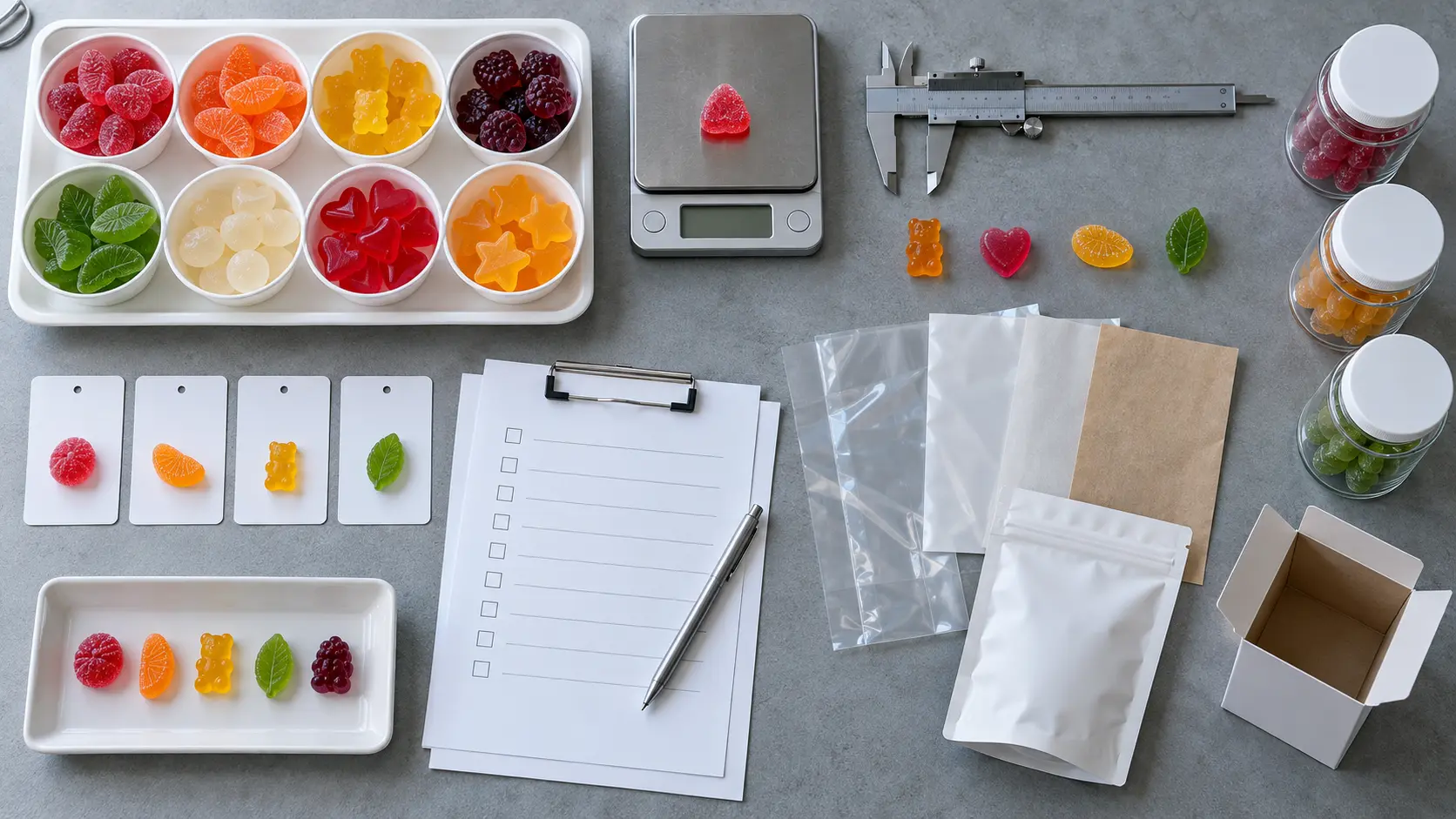
The finished-lot release plan can include piece mass, appearance, texture, moisture or water activity where meaningful, sensory result, risk-based microbiological scope, pack weight, seal checks, coding legibility and retained samples. Name the methods, tolerances and person authorised to accept deviations. A generic certificate of analysis or management-system certificate is not proof that the buyer's specific lot met these agreed controls.
Connect the lot to ingredients and packaging
Regulation (EC) No 178/2002 requires traceability through production, processing and distribution. The buyer file should connect ingredient and additive batches, recipe and cooking or depositing run, coating stage, packaging components and finished cases. Keep lot identification distinct from other mandatory information: Directive 2011/91/EU sets the EU lot framework. Agree the code model, print location, unit-to-case relationship and records used for complaints, withdrawal or recall.
Test the approved gummy in the proposed pouch, tub or carton, not only in a temporary sample bag. Film barrier, seal integrity, headspace, pack fill, product sticking, colour stability and transport compression can change the result. Regulation (EC) No 1935/2004 provides the food-contact framework, so request support for the real material combination and intended conditions of use. Packaging review should also consider Regulation (EU) 2025/40, which applies from 12 August 2026, while checking the relevant transition and market details.
Send one comparable RFQ
- Destination, channel, product type, piece shape, coating, flavours, colours and proposed claims
- Controlled recipe, gelling system, ingredient and additive specifications, origins and change rules
- Piece mass, dimensions, appearance, texture, moisture or water activity and sensory tolerances
- Development, reference and first-production sample stages with acceptance owners
- Lot-release tests, retained samples, traceability, deviation route and recall contacts
- Pouch, tub, carton and pallet specifications with compatibility and transport checks
- Quantity, named delivery place, price basis, minimum order, lead time and offer validity
Require suppliers to mark every deviation on the same sheet and keep technical approval separate from commercial comparison. The comparable export quote guide structures delivery terms and inclusions. Send the completed brief through the Marnivo inquiry form for a case-specific sourcing review.