Define the use case before asking for a price
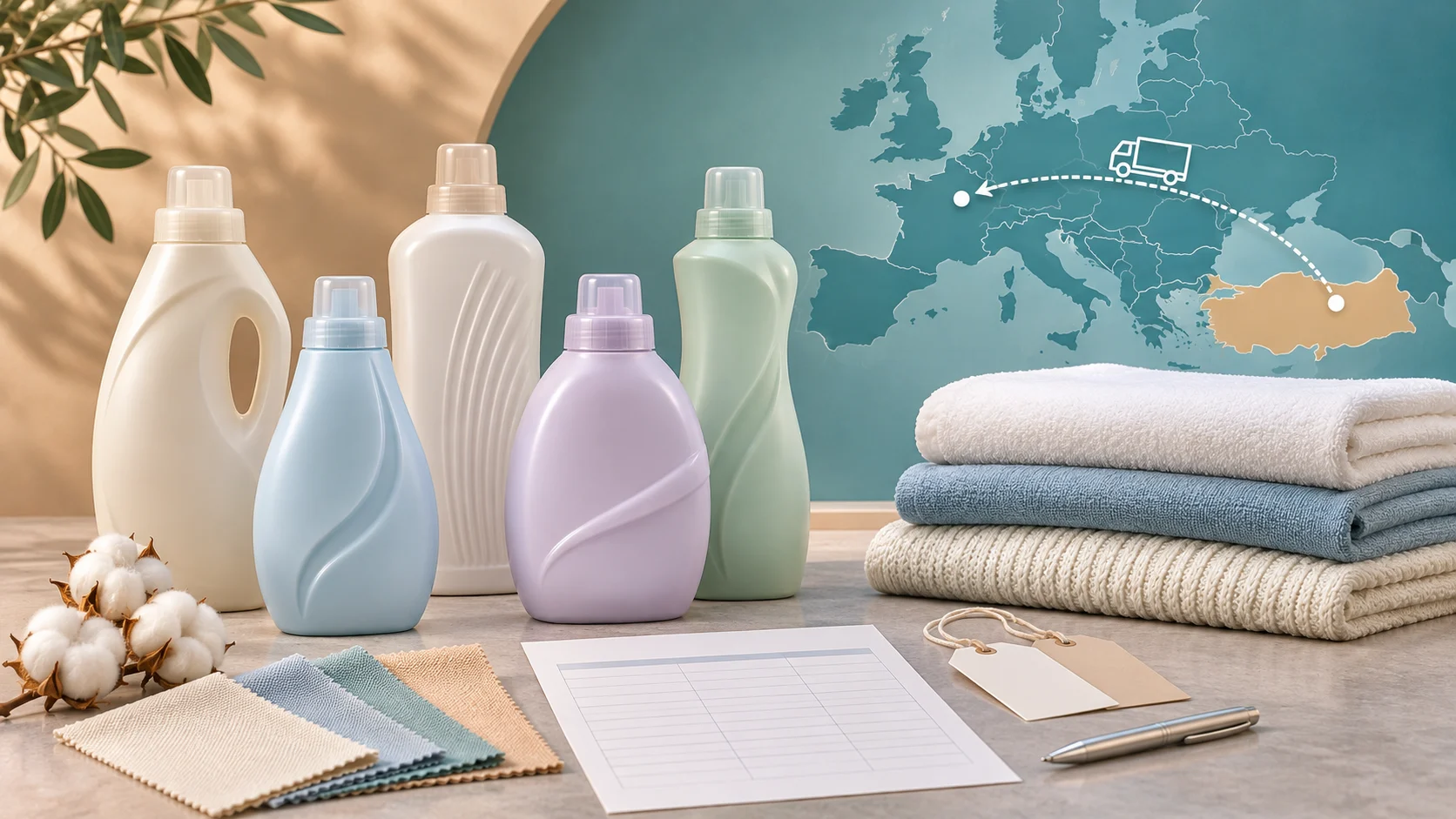
Fabric softener is not a generic scented liquid. Start with the destination countries, retail or professional channel, washing-machine type, typical load, water-hardness range, textile mix, fragrance position, concentration concept, bottle size and intended doses per pack. State whether the brief covers a ready-to-use rinse conditioner or a concentrate, and define the dosing instruction that every bidder must quote against.
Use a market reference only to explain expected handling, viscosity and fabric feel; do not ask a supplier to copy another brand. The cleaning-products buyer page frames the category, while the private-label workflow assigns responsibility for specification, formula, artwork, samples and changes.
Control formula identity and approved changes
Request a formula code and revision, composition ranges relevant to detergent disclosure and mixture classification, fragrance and preservative identity, colour, declared density and pH test method, viscosity method and temperature, appearance, odour and agreed storage conditions. Link the finished-product specification, safety data, label draft, signed sample and production recipe to the same revision.
Ask which raw-material supplier, grade, fragrance, preservative, dye, process or filling change requires buyer approval. A fragrance substitution can alter odour, colour stability, classification or poison-centre data even when the front label looks unchanged. Set release checks, retained-sample rules, deviation handling and change-notification timing before commercial approval.
Compare samples with one written protocol
Build a repeatable wash-and-rinse protocol before ranking samples. Record washer model, programme, temperature, load mass, textile types, water hardness, detergent used, softener dose, number of repeats, drying method and conditioning time. Blind the coded samples where practical. Score wet and dry odour, softness or handle, static tendency, residue, colour transfer, visible deposits, pour and dosing behaviour and bottle cleanliness.
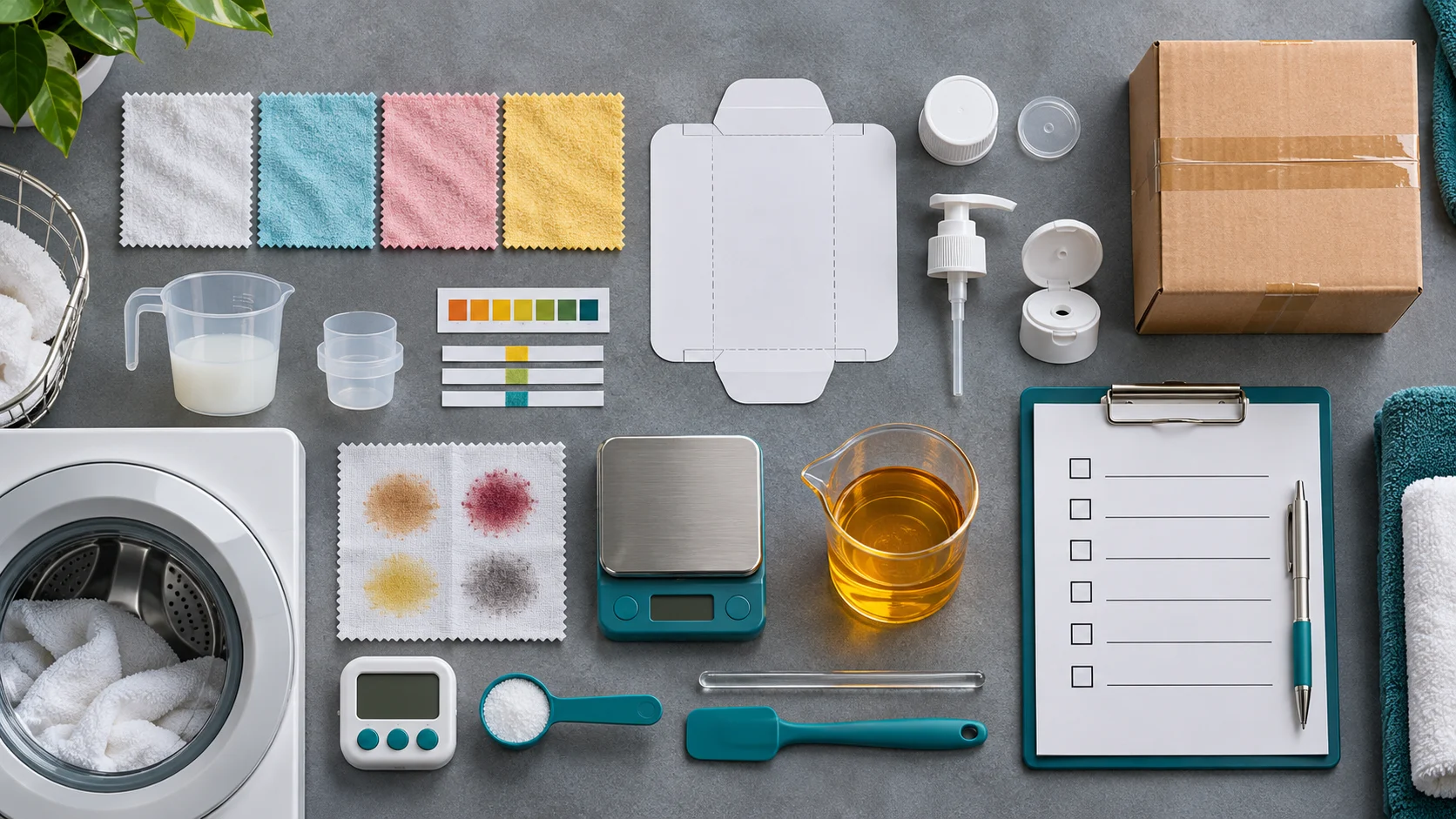
Add absorbency or rewettability checks when towels or cleaning textiles are in scope, because a strong softening effect may not match every end use. Run the final formula in the final pack after defined storage and transport simulation. Keep internal preference testing separate from claims such as long-lasting fragrance, hypoallergenic, biodegradable or reduced environmental impact; each claim needs a defined method, evidence and destination-market review.
Build the EU file for the actual launch date
For a 2026 EU launch, assess the final product under the current Regulation (EC) No 648/2004 on detergents, which expressly treats laundry fabric softener as a detergent. The pack must carry the applicable ingredient-class disclosures, instructions for use and special precautions; perfumes and preservatives have specific disclosure treatment, and listed fragrance allergens above the regulatory threshold must be named. Build the label from the released formula rather than from a generic template.
Regulation (EU) 2026/405 replaces the current detergent framework but generally applies from 23 September 2029. Keep it as a dated transition workstream for economic-operator roles, digital product passport data, label records and formula information; the 2029 change does not remove the rules applying to the present launch.
Document the final mixture classification under CLP Regulation (EC) No 1272/2008. Classification determines any pictograms, signal word, hazard and precautionary statements and packaging features. If the final mixture is classified for health or physical hazards, confirm the responsible EU notifier, poison-centre notification and UFI before placing it on the market. ECHA states that one UFI corresponds to one mixture composition, so do not reuse a code from another fragrance or formula.
Validate pack compatibility, transport and artwork
Specify bottle resin and weight, recycled-content target where supported, closure and tamper evidence, measuring cap, label construction, fill volume and tolerance, coding area, case and pallet. Test the filled pack for leakage, closure torque, paneling or swelling, stress cracking, colour migration, label adhesion, code legibility, dosing cleanliness, drop or compression performance and pallet stability under agreed conditions.
Regulation (EU) 2025/40 on packaging and packaging waste applies from 12 August 2026, with phased obligations. Record who verifies the applicable pack requirements and the evidence behind recyclability, recycled-content or environmental statements. Destination artwork must follow the released detergent disclosure and CLP decision, required languages, responsible operator details and UFI where applicable.
Send one comparable RFQ matrix
- Destination, channel, washer and load assumptions, water hardness, concentration, dose and pack size
- Formula revision, fragrance and preservative identity, physical methods, tolerances and change-control rules
- Signed sample, wash protocol, blinded scorecard, repeat count, storage conditions and acceptance limits
- Detergent ingredient file, final CLP decision, SDS and PCN/UFI status where applicable
- Bottle, closure, label, filled-pack compatibility, transport tests and destination artwork ownership
- Quantity, named delivery place, price basis, minimum order, lead time, offer validity and declared deviations
Ask every bidder to complete the same matrix and separate technical approval from the commercial comparison. The comparable export quote guide structures delivery terms and inclusions. Submit the controlled brief through the Marnivo inquiry form for a case-specific sourcing review.