Define the chocolate before comparing the price
A quotation for “70% chocolate” leaves important buying decisions open. Is the offer a retail bar, a filled piece, couverture for a bakery, or a coating with a different fat system? Specify the destination, intended use, unit weight, dimensions, pieces per case and expected volume. Record manufacturing country separately from the origin of cocoa ingredients; sourcing from Türkiye does not establish where the cocoa was grown.
Use our snacks and confectionery buyer page to place the item within your assortment. Directive 2000/36/EC defines cocoa and chocolate categories and composition requirements. Have the importer check the proposed legal name against the complete recipe and destination implementation. A front-of-pack percentage alone does not describe every ingredient or prove that a coating meets a reserved chocolate name.
Freeze the recipe and allergen responsibilities
Request a version-controlled formulation showing cocoa mass, cocoa butter, cocoa powder where used, sugars, milk ingredients, other fats, emulsifiers, flavourings and inclusions. Separate total cocoa solids from cocoa butter and non-fat cocoa solids. For filled products, identify the shell and filling separately, including their proportions. Agree whether substitutions are permitted and require written reapproval when the recipe, production site or inclusion supplier changes.
Ask for an allergen matrix covering ingredients, shared equipment, cleaning verification and rework. Milk, nuts and soya need particular attention where relevant. Regulation (EU) No 1169/2011 governs mandatory information, allergen presentation and destination-language requirements. Review precautionary wording with the responsible operator; do not copy a “may contain” statement as a substitute for understanding the process. Treat vegan, origin and other marketing claims as separate evidence requests.
Match the safety evidence to the actual product
Build a testing and release plan around the recipe, ingredients and manufacturing process. The hygiene framework in Regulation (EC) No 852/2004 includes HACCP-based procedures. Request a product-specific hazard review, supplier controls, foreign-material checks and traceability to ingredient and packaging lots. Agree who can release a batch and what happens after an out-of-specification result.
The cadmium provisions for cocoa and chocolate in Regulation (EU) 2023/915, Annex I distinguish product categories and cocoa-solids ranges. Ask the laboratory or technical adviser to identify the applicable entry, sample basis, method and reporting limit. A generic cocoa-bean report is not automatically a finished-bar release result. Match the report’s product, lot and date to the offered goods; commission additional checks where the risk review requires them.
Approve a reference sample and shelf-life protocol
Evaluate a production-relevant sample using the same written method for every bidder. Record appearance, aroma, snap, melt, texture, inclusion distribution, unit weight and dimensions. Define tolerances and an agreed procedure for surface bloom, breakage and scuffing. Photographs help document acceptance, but they cannot identify the cause of every surface defect or establish food safety.
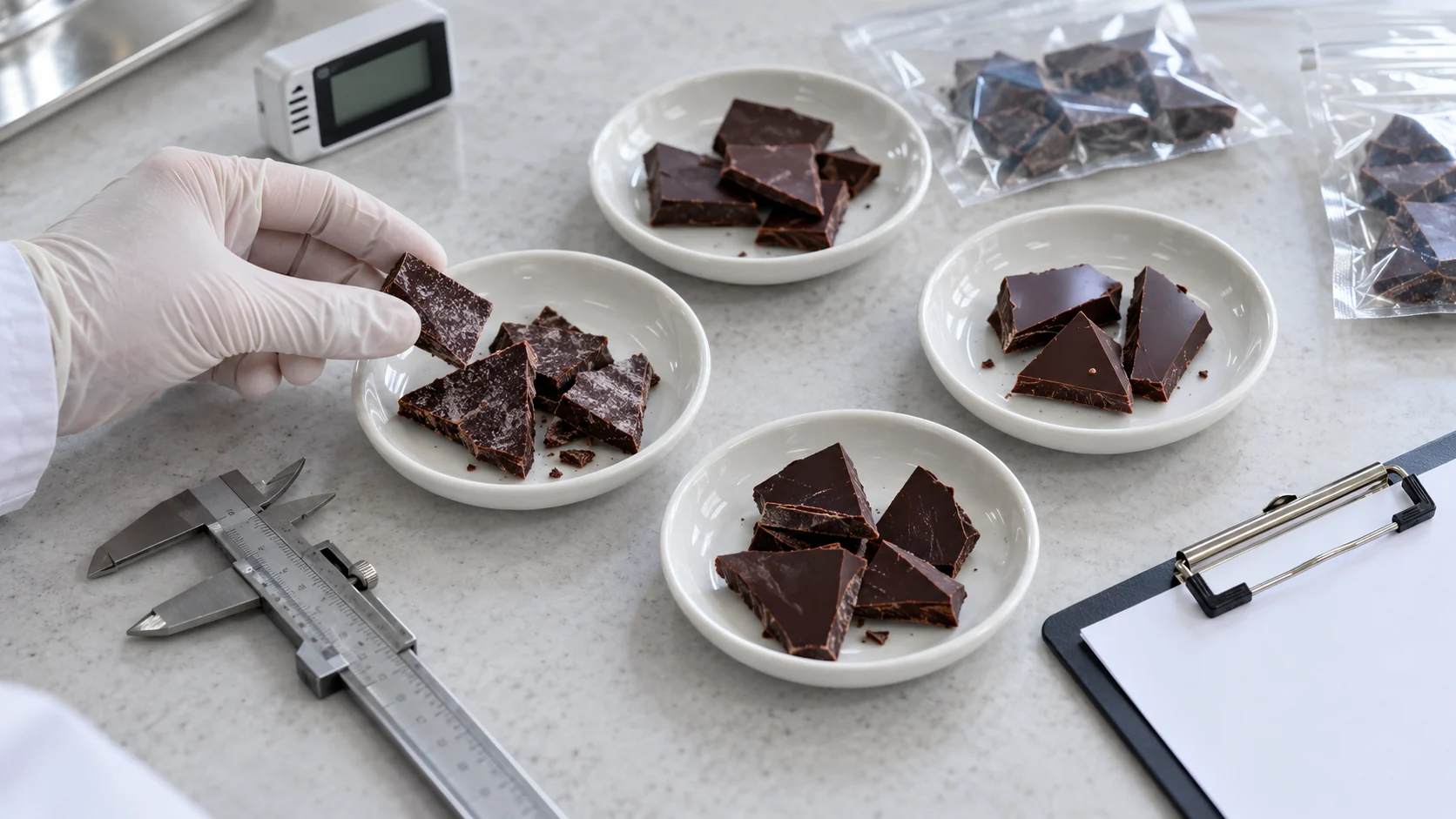
Retain sealed references with recipe revision, lot, date and pack structure. Ask for shelf-life evidence for the actual formula and final packaging, including the agreed sensory and safety endpoints. Filled chocolate needs its own assessment; a shelf-life statement for a plain dark bar should not be transferred to a dairy or fruit filling. Specify minimum remaining shelf life at arrival and the point at which it is measured.
Validate packaging and the transport handover
Define the primary wrapper, seal, outer sleeve, case dividers, pallet pattern and coding area. Request evidence that the actual food-contact material is suitable for this fatty food and intended contact conditions; the EU framework is Regulation (EC) No 1935/2004 and applicable material-specific measures. Check odour transfer, seal performance and protection against light, moisture and damage rather than accepting “food grade” as a complete specification. Verify lot identification separately under Directive 2011/91/EU.
Callebaut’s storage guidance explains the risks of temperature shocks, condensation and strong odours. Agree product-specific storage and transport conditions with the manufacturer instead of assuming one universal set point. Allocate logger placement, record review, unloading checks and deviation decisions. Align the named Incoterms® handover with those duties; a container setting alone is not evidence of the product’s temperature history.
Send one specification and require declared deviations
- Product category, destination, use, weight, case quantity and recipe revision
- Cocoa breakdown, fat system, filling or inclusions and allergen controls
- Sampling, analyses, applicable limits, batch identification and release authority
- Reference sample, acceptance method and shelf-life evidence
- Artwork, languages, food-contact file, coding and transport conditions
- Quantity, named delivery place, price basis, lead time and offer validity
For a purely illustrative comparison, 24 bars of 80 g contain 1.92 kg net chocolate per case. Compare both case and unit prices only after the recipe, pack and delivery basis match. Confirm actual minimum order, availability, certifications and timing in writing for the named factory and SKU. The comparable export quote guide structures commercial inclusions; share the completed brief through the Marnivo inquiry form for a case-specific sourcing discussion.