Define the bar and buying unit before asking for price
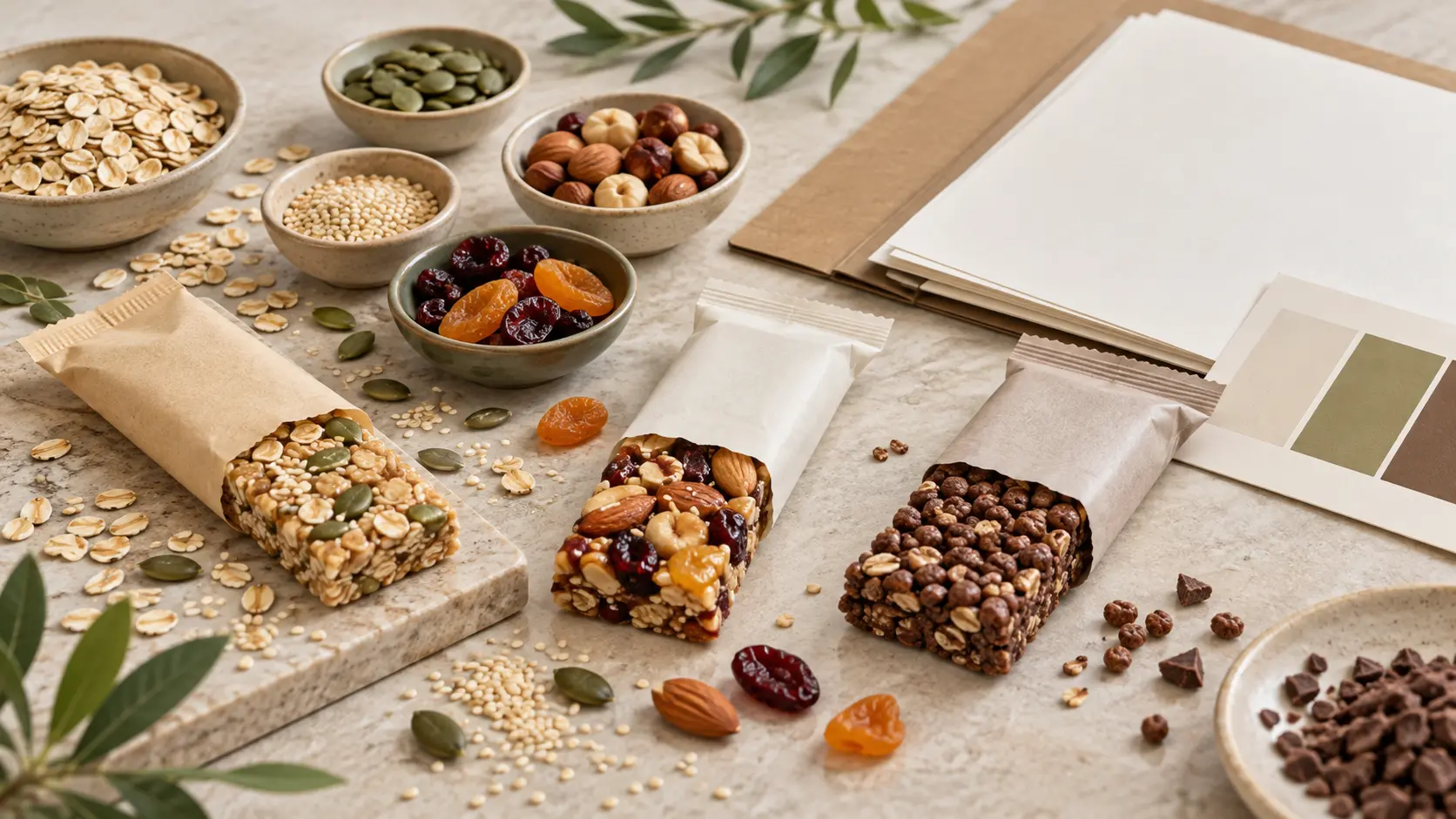
“Cereal bar” is not a complete quotation unit. State whether the product is baked, cold-formed or extruded; chewy, crisp or layered; coated or uncoated; and intended for a standard snack, breakfast, sports or another defined position. Fix the target piece weight, pieces per retail pack, multipack arrangement and destination market. A bar built around oats and fruit behaves differently from a nut-and-seed bar or a crisp cereal bar, so bidders should not choose the format silently.
Create one brief for each recipe, coating, piece size and market. Record target appearance, bite, sweetness, aroma, inclusion distribution and tolerance for breakage or stickiness. The snacks and confectionery buyer page helps place the item within the wider category, while the private-label workflow assigns formula, artwork, sample and change approvals. Catalogue images do not prove stock, minimum order, certification or lead time; obtain those points in writing for the offered factory and SKU.
Lock the final formula and allergen file
Request the complete ingredient list in descending order and identify the technical role of syrups, fats, humectants, emulsifiers, flavours, coatings and binding systems. For oats and other cereals, nuts, peanuts, sesame, milk, soy or other relevant materials, map intentional allergens and possible cross-contact separately. Require the supplier to connect each raw-material specification to the proposed formula revision and to notify agreed changes before production.
Define measurable acceptance criteria for the finished bar: piece weight and dimensions, moisture or water-activity approach where technically relevant, texture window, coating coverage, foreign-material controls, microbiological criteria and sensory decision. Each limit needs a method, unit, sampling point and responsible party. Add an ingredient-risk plan for contaminants under Regulation (EU) 2023/915 and pesticide residues under Regulation (EC) No 396/2005. The relevant checks depend on the actual cereals, nuts, seeds, fruit and cocoa used; a generic certificate is not a substitute for a product-specific control plan.
Build EU claims and label data from the approved recipe
For EU retail, Regulation (EU) No 1169/2011 frames mandatory food information, including the ingredient list, emphasised allergens, net quantity, date marking, storage or use instructions where required, responsible food business operator, nutrition declaration and language understood in the destination market. Build the artwork data from the final recipe and pack, not from an earlier sample. Confirm product name, quantitative ingredient declarations where applicable, lot coding and country-of-origin statements case by case.
Do not treat “source of fibre”, “high protein”, “no added sugar” or a health message as a design choice. Nutrition and health claims must meet the applicable conditions under Regulation (EC) No 1924/2006 and the current EU claims framework. Calculate the final product, verify the permitted wording and retain the supporting analysis before artwork approval. Check every additive against its food category and conditions of use under Regulation (EC) No 1333/2008; permission in another bar, bakery or confectionery category does not automatically answer the proposed recipe.
Approve a production-relevant sample, not only a kitchen prototype
Use a documented sample chain. Record supplier, factory, product code, formula revision, lot, production date, process route, pack material and sample custody. A development sample can confirm direction, but the approval set should include a sample representative of the intended production process and ingredients. Compare piece weight, dimensions, texture, inclusions, coating, odour, flavour and breakage against the written acceptance sheet, and retain a sealed reference sample.
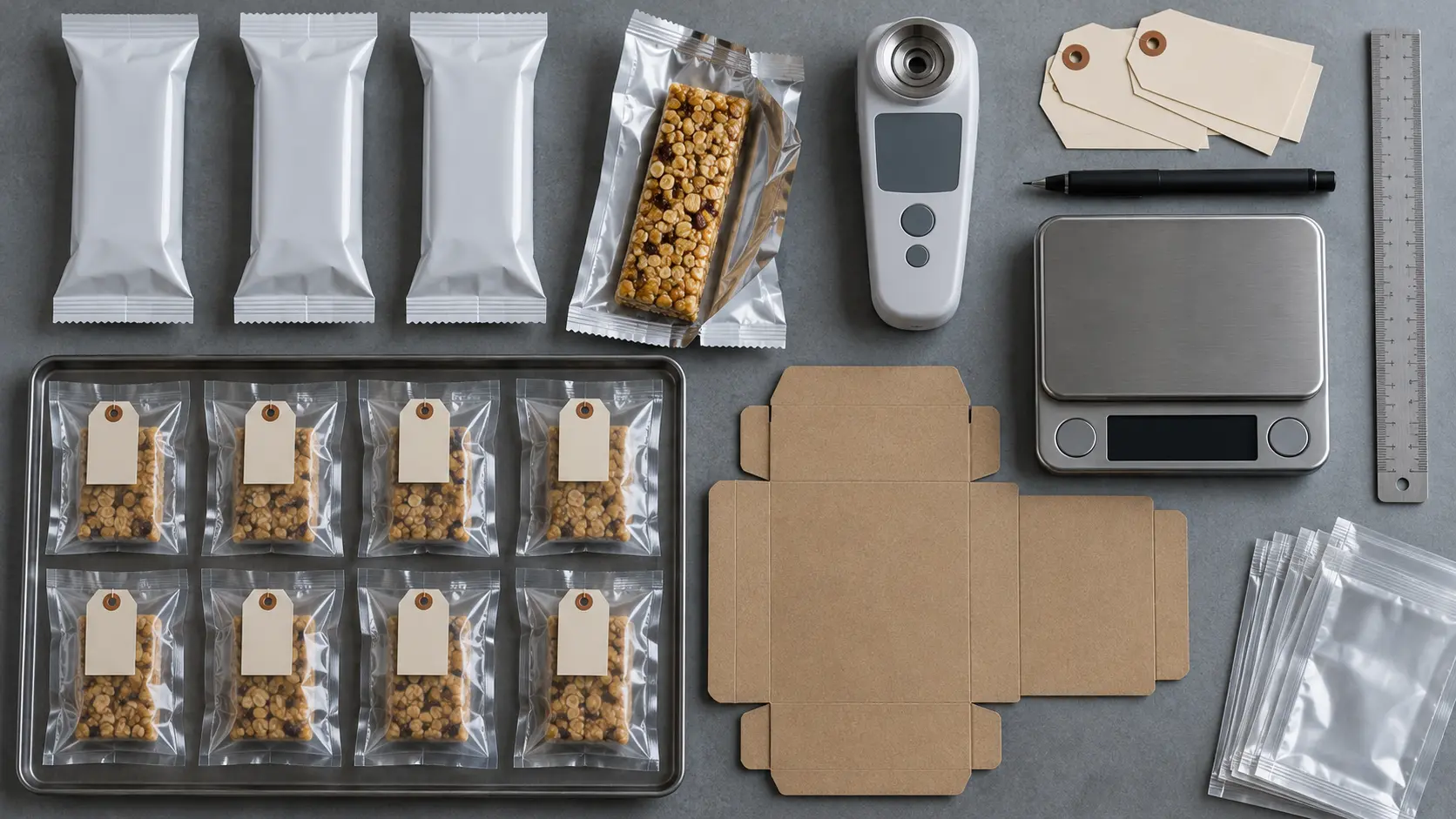
Agree which changes trigger reapproval: cereal or nut source, syrup or fat system, allergen status, flavour, coating, process line, piece dimensions, primary film or carton. Price, minimum order, available capacity, certification, timing and claim eligibility remain offer-specific until the exact offer and evidence are confirmed.
Validate the pack and shelf-life plan together
Specify the primary wrapper structure and sealing window, print and code area, pack dimensions, gas or oxygen-control approach if proposed, multipack or display carton, case count, pallet pattern and transport protection. Food-contact materials must be suitable for the intended food and conditions of use under the EU framework led by Regulation (EC) No 1935/2004; plastic layers may also require the applicable declaration and supporting documentation under the specific plastics rules. Ask for the compliance file for the actual material structure, not only a generic film statement.
The shelf-life protocol should use the final recipe, production process and pack. Define storage conditions, test points and acceptance criteria for texture drift, oxidation or off-notes, moisture movement, coating appearance, seal integrity, microbiology and consumer-relevant breakage. State the required remaining shelf life at arrival and how it will be verified. A printed best-before date is an output of the validated plan, not the plan itself.
Send one comparable cereal-bar RFQ
- Bar type, use occasion, process route, piece weight, dimensions, texture and sensory reference
- Full formula, ingredient specifications, allergen matrix, cross-contact controls and change rule
- Finished-product limits, methods, sampling plan, microbiological criteria and retained sample
- EU label languages, nutrition data, proposed claims, additive review and artwork owner
- Ingredient-specific contaminant and pesticide-residue controls for the actual recipe
- Production-relevant sample, approval sheet and events that require reapproval
- Wrapper structure, food-contact file, coding, carton, pallet and shelf-life protocol
- Requested volume, destination, named Incoterms® place, price, minimum order, lead time and offer validity
Ask every bidder to complete the same sheet and mark deviations rather than rewriting the brief. The comparable export quote guide structures delivery terms, exclusions and validity. Use the Marnivo inquiry form to share the recipe, market and pack brief for a case-specific review.