Define the finished application before asking for price
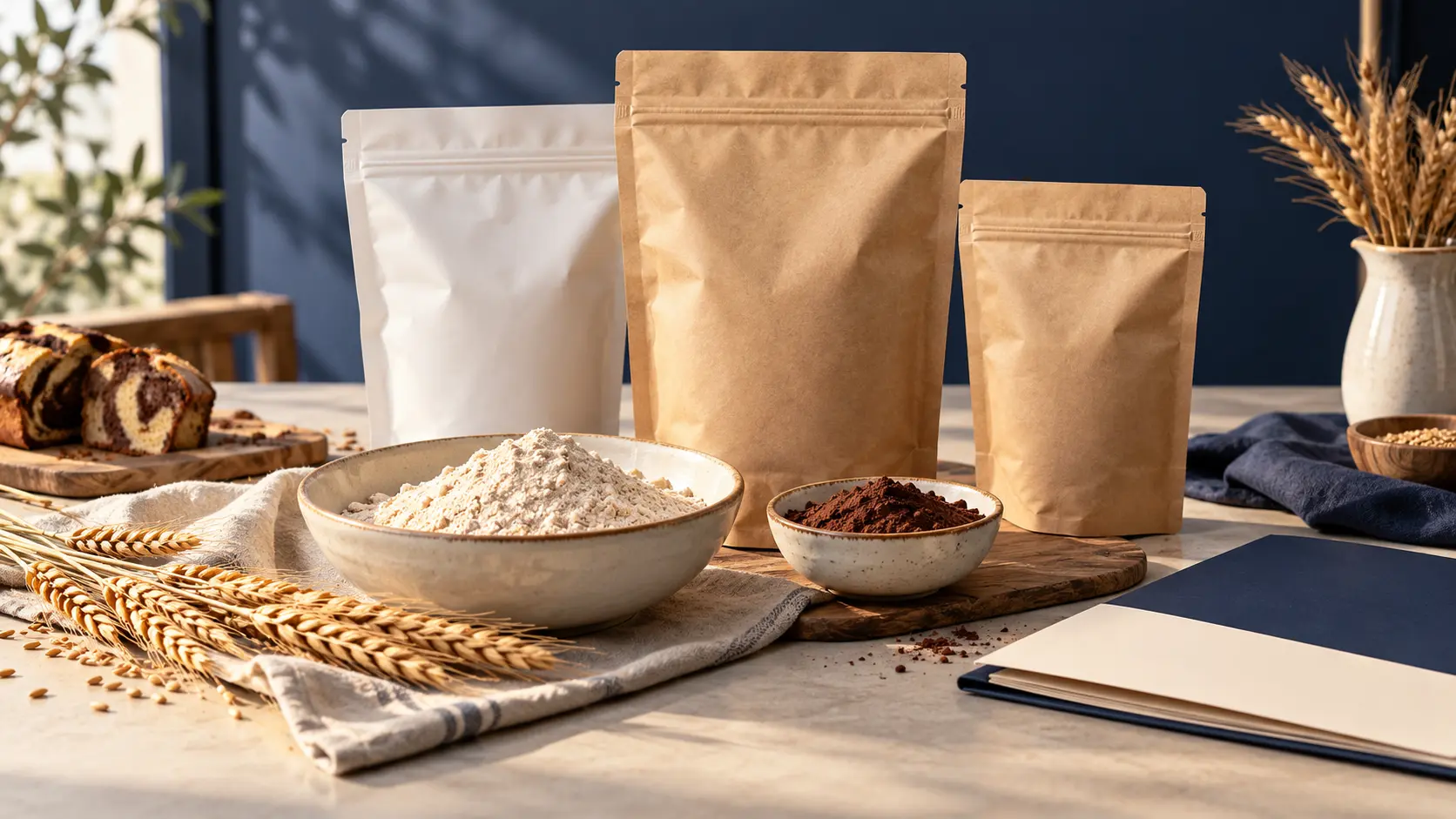
“Bakery mix” is not a complete quotation unit. State whether the SKU is a complete mix, a concentrate to which flour is added, or a functional improver. Name the finished application—bread, cake, muffin, cookie, pastry or another product—and record the recipe, batch size, mixing sequence, water and fat addition, equipment, proofing or resting step, baking profile and target yield. The same powder can behave differently when the buyer changes flour, process or oven.
Create a separate brief for each flavour, colour, pack weight and market. Define the target crumb, volume, spread, texture, colour and sensory reference without promising a result before trial. The bakery and pastry buyer page can frame the category, while the private-label workflow helps assign formula, artwork, sample and change-control approvals. Catalogue images do not prove availability, minimum order, certification or lead time; ask the bidder to confirm these for the named plant and SKU.
Lock the measurable powder and performance specification
Request the full ingredient list and the percentage or functional range of the principal ingredients. For flour-based mixes, agree the relevant flour type and measurable limits such as moisture, ash, protein or wet gluten, particle size and any application-specific falling-number or dough-performance measure. For cocoa, dairy, egg, seeds, nuts, emulsifiers, raising agents, enzymes or flavours, identify the exact material, supplier change rules and any carry-over that affects the declaration. Do not accept “standard recipe” as the only specification.
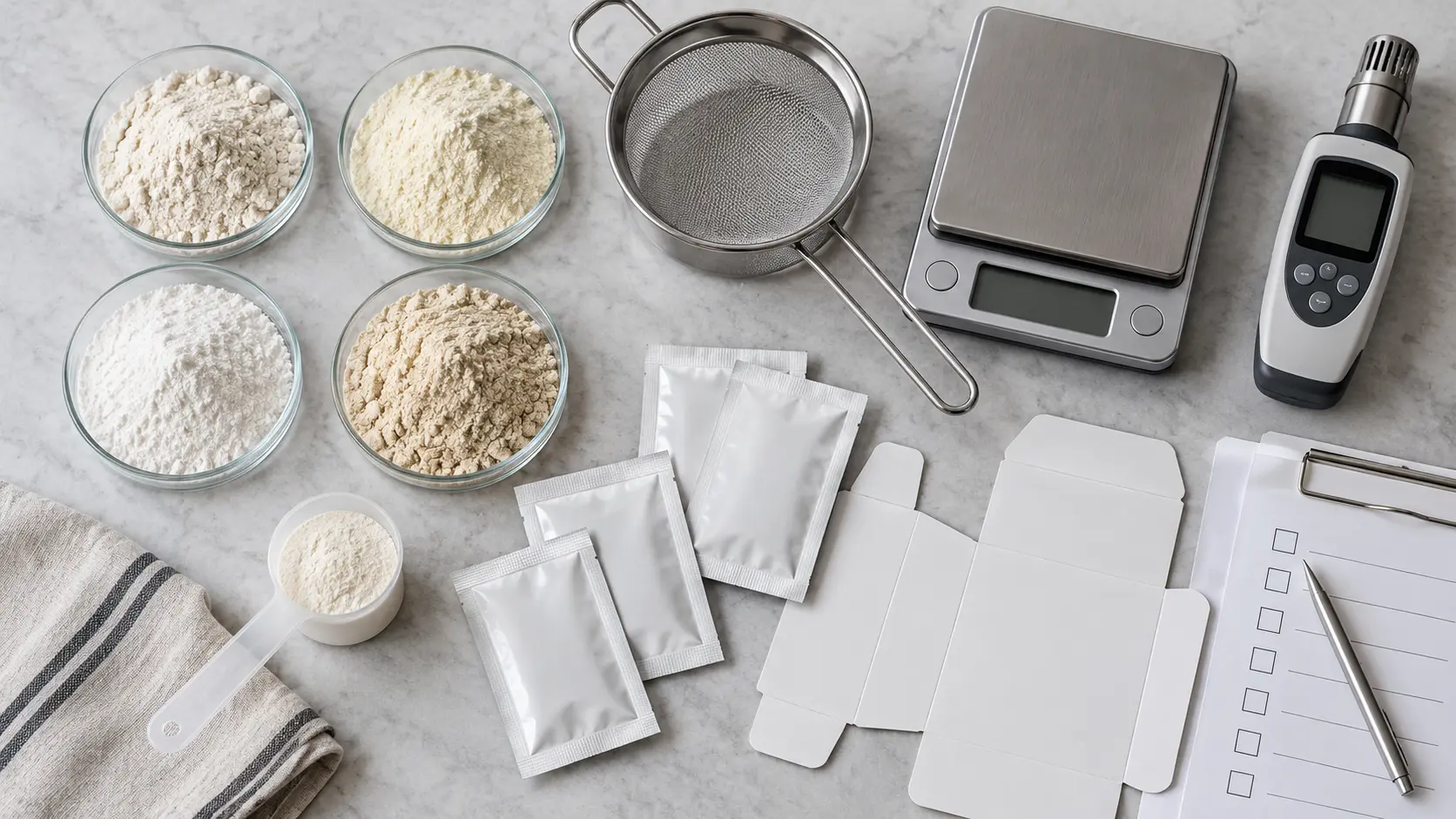
Define finished-mix limits for appearance, odour, bulk behaviour and microbiological quality, then link each limit to a method, sampling plan and unit. Add a bench recipe and acceptance window for the baked result: for example piece weight, height or spread, crumb structure, colour and sensory decision. Tolerances must be agreed before price comparison. A supplier’s certificate should refer to the offered product code and lot rather than to a generic product family.
Build the EU compliance file around the final recipe
For EU retail sale, Regulation (EU) No 1169/2011 sets the framework for mandatory food information. Build artwork from the approved recipe: legal or descriptive name, ingredients in descending order, emphasised allergens, quantitative declarations where required, net quantity, durability, storage and use conditions, responsible food-business operator, nutrition declaration and market language. The Commission’s food-information page and FLIS are useful checks, but the final label still depends on the recipe and destination. Lot identification has a separate legal basis: check the marking against Directive 2011/91/EU and the destination market's implementation.
Confirm that every additive is authorised for the relevant food category and conditions under Regulation (EC) No 1333/2008; an additive permitted in one bakery category is not automatically permitted in another. Identify enzymes separately and review the applicable route. Set ingredient-appropriate controls for contaminants under Regulation (EU) 2023/915 and pesticide residues under Regulation (EC) No 396/2005. Ask for product-specific evidence; do not turn a supplier certificate into a blanket compliance claim.
Sample and test the offered SKU
Use a documented sample route. Record supplier, plant, product code, formula revision, lot, production date, pack and chain of custody. Test the powder against the agreed specification, then run the same bench recipe with controlled ingredients and equipment. Keep a reference sample and record deviations. When allergens are present, review segregation, cleaning validation, rework and label reconciliation for the actual production line rather than accepting a general allergen policy alone.
Compare at least a development sample and a production-representative sample before artwork approval. If the formula, flour source, enzyme system, pack structure or process changes, define which tests must be repeated. Claims such as high protein, source of fibre, wholegrain, clean label or “free from” need a precise legal and technical basis in each target market. Keep them as proposals until composition, process, cross-contact controls and label wording are verified.
Validate moisture protection, coding and shelf life
Dry mixes can lose flow or performance after moisture pickup. Specify pack material and barrier expectation, seal geometry, fill weight and tolerance, headspace, closure, coding area and tamper evidence. Run seal, drop, compression and transport trials on the intended retail and export packs. Shelf-life work should use the final formula and pack, with defined storage conditions and checkpoints for moisture, caking, odour, microbiological quality and baked performance.
Agree units per case, liner or inner protection, case dimensions, gross weight, pallet pattern, stacking limit and stretch wrap. Reconcile retail artwork, outer-case identification and lot traceability before print. Shelf life, price, stock, minimum order, production timing and Incoterms® rule remain supplier- and order-specific until confirmed in writing.
Send one comparable bakery-mix RFQ
- Finished application, complete mix or concentrate, recipe, process and target yield
- Product code, full ingredient and allergen file, formula revision and change-control rule
- Powder limits, methods, microbiological criteria and baked-performance acceptance window
- Additive and enzyme review, contaminant and residue plan, market-specific claim basis
- Sample route, production-representative trial, reference sample and repeat-test triggers
- Retail pack barrier, weight, seal, coding, shelf-life protocol, case and pallet data
- Artwork languages, responsible operator, nutrition inputs, lot and durability information
- Price, minimum order, timing, quotation validity and Incoterms® rule with named place
Require every bidder to complete the same table and mark deviations. Align commercial fields with the comparable export quote guide. Share the application, destination and pack brief through the Marnivo inquiry form for a case-specific discussion.