A low unit price for biscuits or confectionery can conceal a different recipe, smaller pack, shorter remaining shelf life or a carton that does not suit your channel. A useful comparison begins with a defined SKU and ends with a destination-ready offer. This checklist is for importers and distributors building a brief for packaged products from Türkiye; it does not assume that any particular item is in stock.
Define the exact product before requesting prices
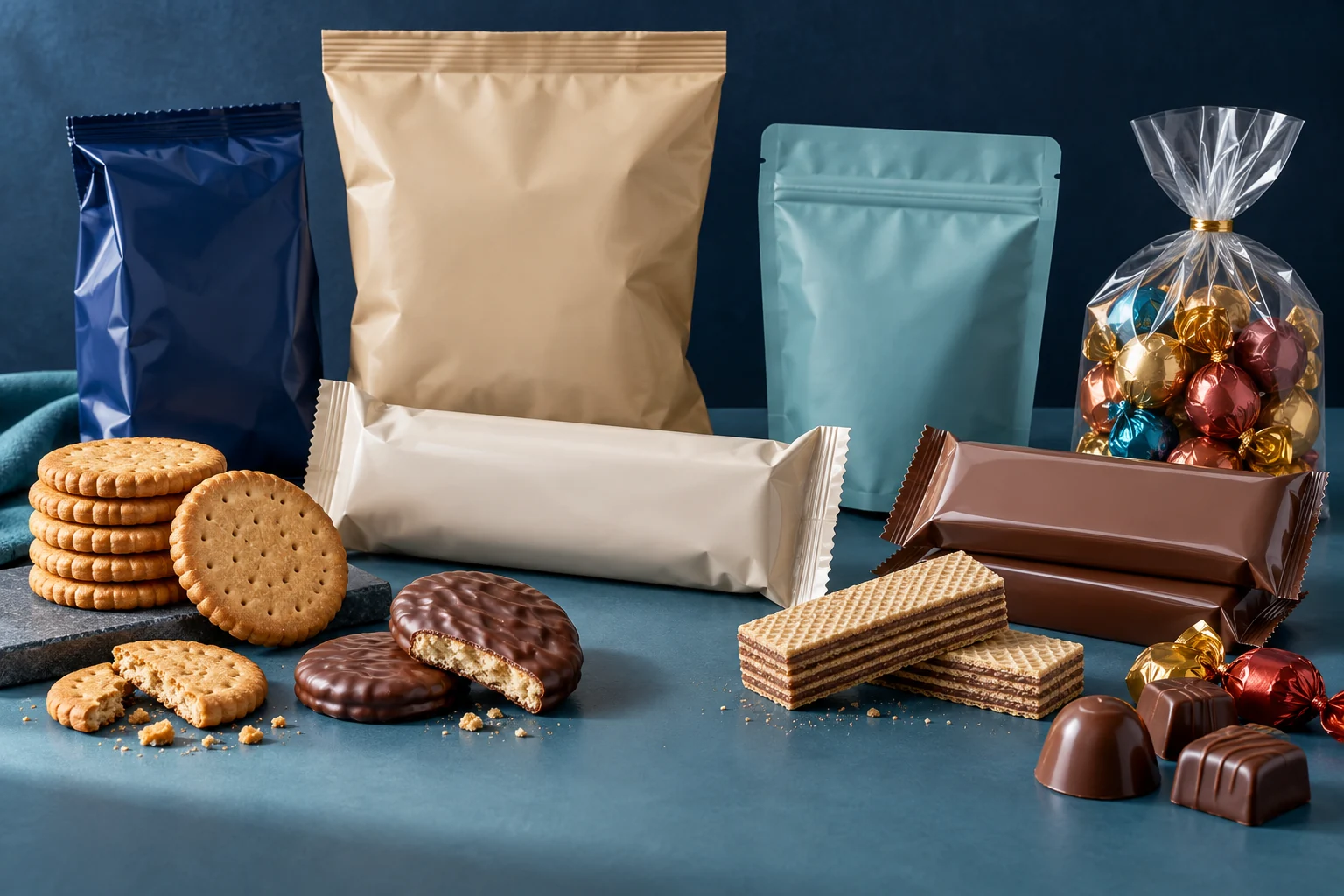
A request for “Turkish snacks” can refer to plain biscuits, filled wafers, chocolate-coated pieces or sugar confectionery. These are different products with different ingredients, handling needs and sales units. Write one row per intended SKU: product type, flavour, net weight, consumer pack, units per display or carton, brand route and destination country. Say which features are mandatory and which are acceptable alternatives. Our snacks and confectionery buyer page can help organise the range before you approach suppliers.
If you are buying for a supermarket, define shelf presentation and barcode needs. Food-service or wholesale buyers may instead prioritise larger packs and case handling. Ask whether a proposed sample has the same recipe and pack as the quoted article. A catalogue photograph is a useful reference for shape and presentation, but it is not a specification or a commitment to supply.
Connect ingredients and allergen information to the actual SKU
Ask for the current specification and ingredient declaration for each flavour and format. Filled wafers, biscuits and coated confectionery may differ in cereal, milk, nut or other ingredients even when sold in one family. Record any requested claims separately and ask for evidence tied to the proposed recipe. Do not infer that a product is allergen-free, halal or suitable for a particular diet from a generic category image.
For EU retail, the European Commission explains the Food Information to Consumers rules, including the emphasis of listed allergens in the ingredients. The Commission's mandatory-information guide is a useful check for prepacked food. These EU references do not establish requirements for a buyer in another country; the importer must check that market's rules for the exact product.
Compare the full packaging chain and remaining shelf life
Ask for the weight and dimensions of the consumer pack, units per display, displays per master carton, carton dimensions and gross weight, pallet pattern and any storage limits. A case price is not comparable until you know the count and net content behind it. A fragile biscuit in a tray and a flow-wrapped wafer can also have different breakage risks. Agree how damage will be assessed and documented at the agreed handover point.
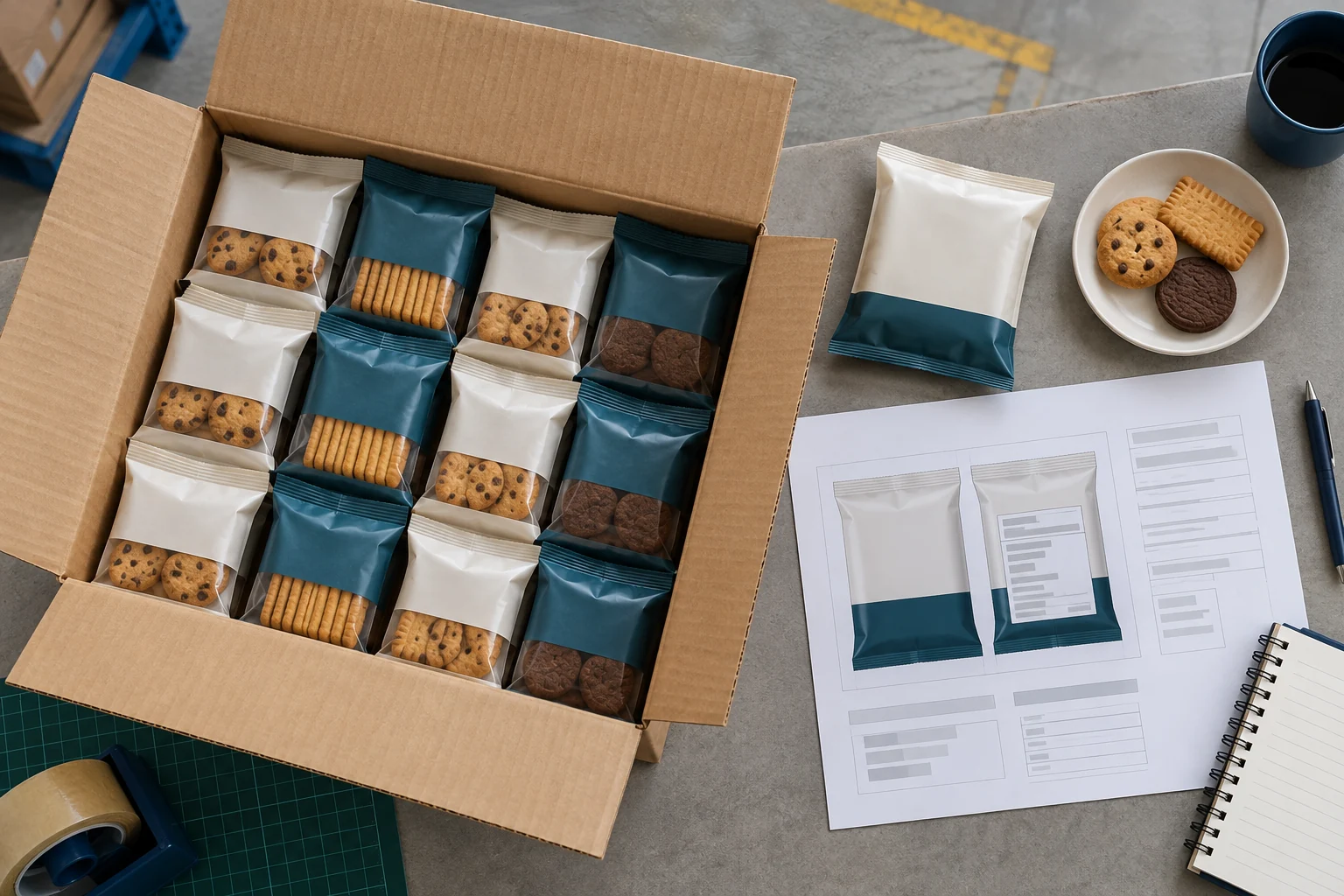
Request the printed durability date format and the minimum remaining shelf life at dispatch and at arrival. Ask whether the sample and final shipment will share the same packaging materials and storage instructions. For products sensitive to heat or moisture, make the transport and warehouse assumptions explicit instead of treating “ambient” as a complete handling plan. A packaging drawing, sample carton and written specification should describe the same unit hierarchy.
Approve the destination label and traceability plan
Before printing or ordering, compare the artwork with the approved recipe and the destination's language and mandatory particulars. Check the product name, ingredient list, allergen presentation, net quantity, date marking, storage instructions where needed, responsible business details and any marketing claims. A label approved for one destination should not automatically be copied to another. If the project uses your own brand, our private label process explains why artwork ownership and final approval need named responsibilities.
Ask how each consumer pack and master carton identifies the production lot, and how the supplier will connect that lot to dispatch documents. EU food law's traceability framework is an official reference for EU operators; the exact obligations in your destination must still be checked locally. Keep the approved artwork version, specification, sample reference and proposed lot information together so discrepancies can be resolved before shipment.
Send a quote request that suppliers can answer consistently
Give each supplier the same SKU table, destination, estimated first quantity and expected reorder pattern. Ask for the product-specific minimum, sample options, lead time, case configuration, available documents and named delivery place with the chosen trade term. The ICC's Incoterms® resource explains why a named place matters. Our export quote request guide offers a format for the commercial comparison.
For example: “We seek two biscuit SKUs for retail in [country]: plain 150 g and cocoa-filled 150 g, in [language] packs, [units] per carton. Please quote [estimated cartons] per SKU to [named place] under [trade term], and provide current ingredient specifications, sample and label files, remaining shelf life and carton dimensions.” Replace every bracket with a real decision or mark it open. Confirm market-access and import requirements for the exact product and origin; EU buyers can start with the Commission's Access2Markets tool.
A short approval checklist
Before accepting an offer, reconcile the recipe, label, sample, consumer pack and master carton against the same SKU code. Confirm who approves changes, what evidence is required for claims, the lot information that will appear on documents and the agreed shelf life at both dispatch and arrival. Finally compare prices against the same physical unit and named delivery place. Availability, certification, minimum quantities and commercial terms should be confirmed for the proposed supplier and article, not assumed from a generic guide.