Define the exact product and use
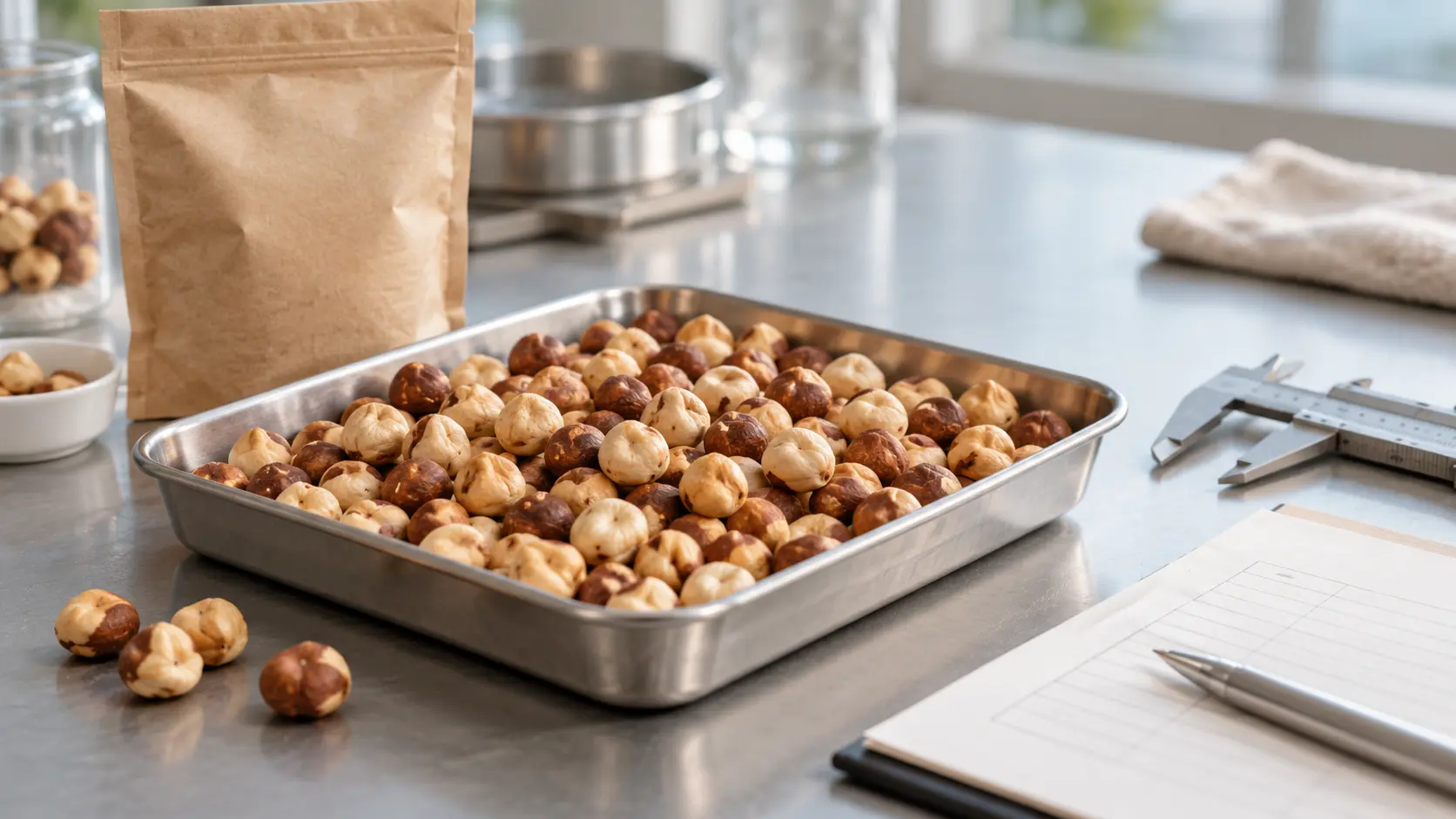
“Hazelnut kernels” is not a complete buying specification. Start with the intended use: retail snacking, chocolate, bakery filling, paste production or further roasting. Then state the required form—raw or roasted, whole or pieces, skin-on or blanched—and the expected size expression. Ask the supplier to describe the offered crop or production period, origin, process, packing format and lot structure. Treat every value as proposed until it appears in the quotation and approved specification.
For ingredient buyers, our bakery and pastry sourcing overview helps frame the application. Buyers comparing snack formats can use the snacks and confectionery overview. These pages define categories; they are not statements of current stock, grade or certification.
Build a measurable quality specification
The UNECE dry and dried produce standards list DDP-04 for hazelnut kernels. Use the standard as a commercial reference for quality language, then write the actual contract values: class or grade, sizing method, tolerance basis, moisture if agreed, and permitted defects. The standard is a reference point, not a substitute for destination law or a signed specification.
Name the defects your team will count: mouldy, rancid, rotten or insect-damaged kernels; shrivelled or insufficiently developed kernels; pieces, twins, foreign matter and shell fragments where relevant. State whether tolerance is measured by number or weight, the sample size, rounding rule and acceptance decision. Add sensory criteria such as clean odour and flavour, but define who evaluates them and what happens after a disagreement. Photos can clarify appearance; they cannot replace a representative sample.
Approve a lot-linked sample plan
Require the pre-shipment sample to carry the supplier, product, lot, sampling date and sampler. Agree how primary increments will be taken across the lot, combined and divided, and how many sealed counter-samples each party retains. A single hand-picked pouch from the top of one bag is not evidence for the whole lot.
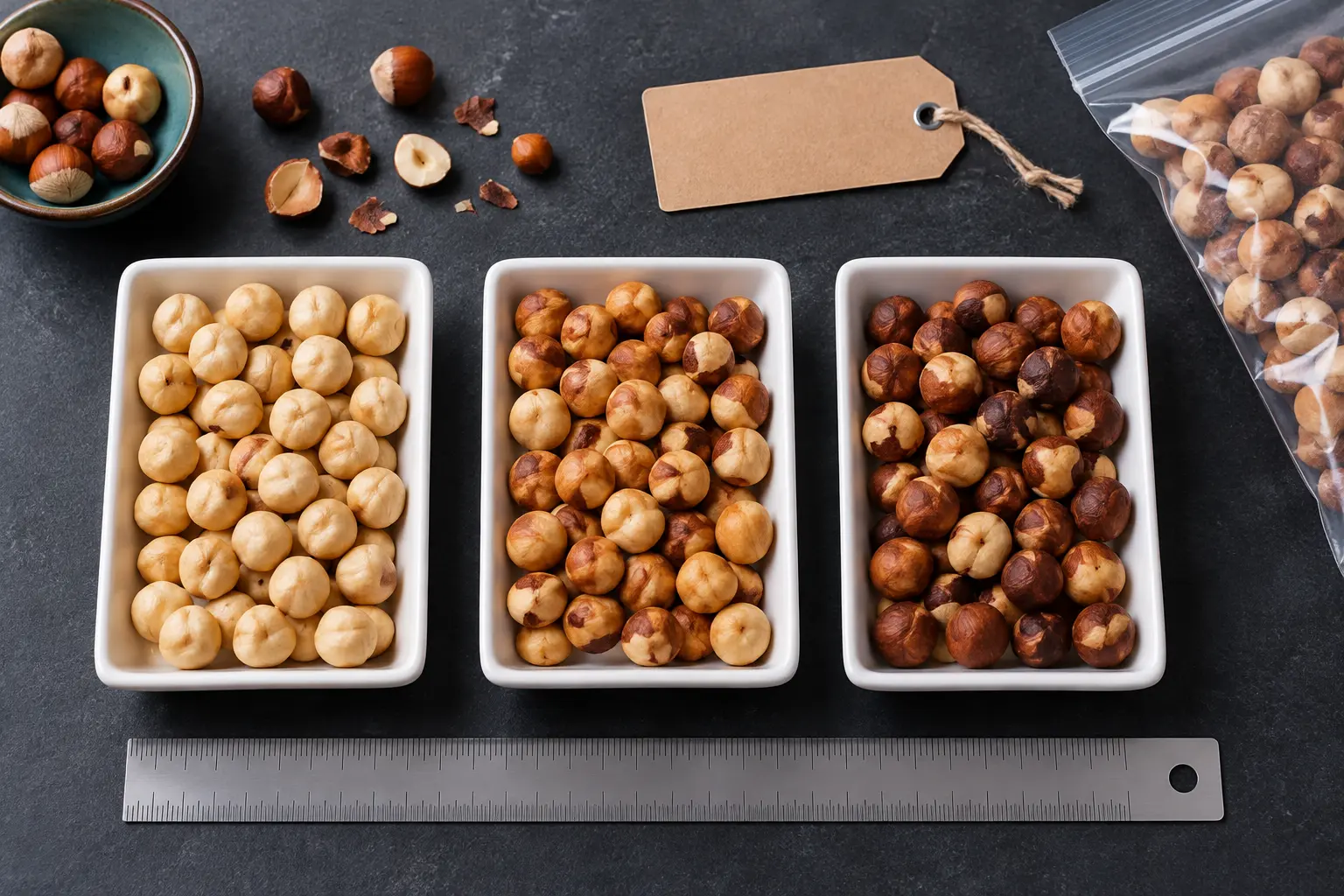
Use a staged review: first verify identity, form, size and visible defects; then approve any sensory or laboratory work required for the actual destination and lot. Record sample weight, method and results in one approval sheet. The EU's official-control rules prescribe specific sampling and analysis methods for mycotoxins; Commission Implementing Regulation 2023/2782 is the current reference for competent-authority controls. Commercial parties should agree a technically representative method and qualified laboratory rather than copying a certificate from another lot.
Set the food-safety evidence
Ask the importer or regulatory adviser to map the product code, destination and intended use before finalising the test panel. For the EU, Commission Regulation 2023/915 sets maximum levels for certain contaminants in food. The applicable category, preparation state and sampling basis matter, so do not turn a general “aflatoxin tested” statement into a compliance conclusion.
The evidence pack should identify the tested lot, laboratory, methods, reporting units and results, plus any buyer-specific microbiological or residue criteria. Request only claims and certificates that can be tied to the supplying site, product and validity period. A management-system certificate, product analysis and import eligibility answer different questions. For EU entry, also check current product-origin controls and the importing country's procedures; not every food of non-animal origin follows the same border route.
Lock packaging and EU label data
Specify inner liner and outer pack, net weight, closure, oxygen or moisture protection if required, pallet pattern, storage conditions, lot marking and shelf-life expression. Ask for the data behind the proposed shelf life and confirm whether it applies to the offered process and pack. Require a final artwork and a plain-text label data sheet before printing.
For prepacked EU retail food, Regulation 1169/2011 governs mandatory food information. Hazelnuts and products thereof are listed allergens and must be indicated according to the regulation. The label review should also cover legal name, ingredients where applicable, net quantity, date marking, storage or use instructions, responsible food business operator, nutrition declaration where required, language and legibility. Origin information is required in specified cases and where omission could mislead. Have the responsible importer validate the final destination-language artwork.
Send a comparable buyer checklist
Send every candidate supplier the same request: product form and intended use; origin and process; grade and size; defect definitions and tolerances; proposed lot and sample method; lot-specific analysis; packaging and pallet data; label data; shelf-life basis; available traceability records; Incoterms® rule and named place; lead time; and which points remain estimates.
A practical request is: “Please quote the attached hazelnut-kernel specification for [destination and use]. Return the completed tolerance table, sample plan, packaging sheet, draft label data and lot-specific test proposal. Separate confirmed values from options, and do not substitute another size, process or lot without written approval.” Use our export quote request guide to align the commercial comparison. Price, minimum order, stock, certification scope and delivery timing must be confirmed for the real inquiry.