Define the product and destination
“Dried figs from Türkiye” is a category, not a purchase specification. Start with the sales format and use: retail snack, bulk ingredient, fig paste, bakery inclusion or further processing. State whether the offer must be whole, flattened, layered, diced or paste; the intended consumer market; pack size; and whether the lot is for direct consumption or will receive a defined physical treatment. Ask the supplier to identify origin, crop or production period, processing site, lot structure and proposed customs classification. Do not infer stock, price, minimum order, certification or lead time from a catalogue page; each must be confirmed for the actual inquiry.
Dried figs may sit within a wider grocery-staples buying programme, while chocolate-coated or portioned formats may belong in a snacks and confectionery range. Use the final application to set the specification rather than forcing one grade into every channel.
Write a measurable quality specification
The UNECE dry and dried produce standards list DDP-14 for dried figs. It can provide shared commercial language, but the contract must still state the selected class, sizing or count method, presentation, moisture basis if agreed, tolerances and destination requirements. Define whether percentages are assessed by number or weight and how rounding works.
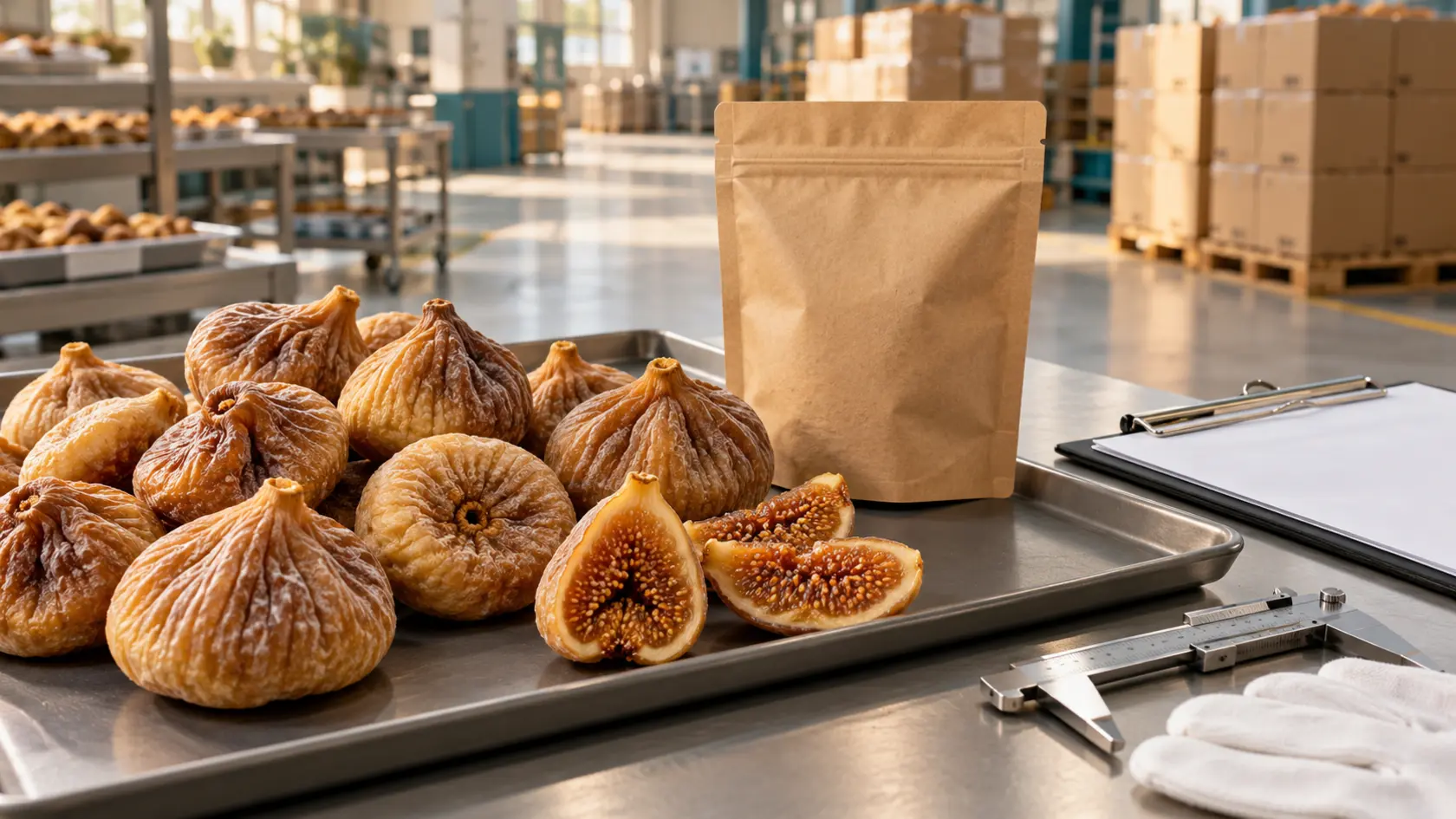
Name the defects to inspect: mould, fermentation, souring, insect damage, sunburn, splits, skin damage, foreign matter, abnormal odour, live pests and pieces where relevant. Describe acceptable colour and texture without relying on an edited reference photo. Record the sample size, decision rule and remedy for an out-of-spec result. A supplier's typical data sheet is useful for comparison; only the signed specification and identified lot establish what is being bought.
Approve a representative sampling plan
A good laboratory result is only as useful as the sample behind it. Require a written plan showing the lot code and mass, package count, sampler, date, locations of incremental samples, aggregate-sample preparation, sealed counter-samples and chain of custody. A hand-picked retail pouch or sample taken from one carton should not be presented as evidence for a container-sized lot.
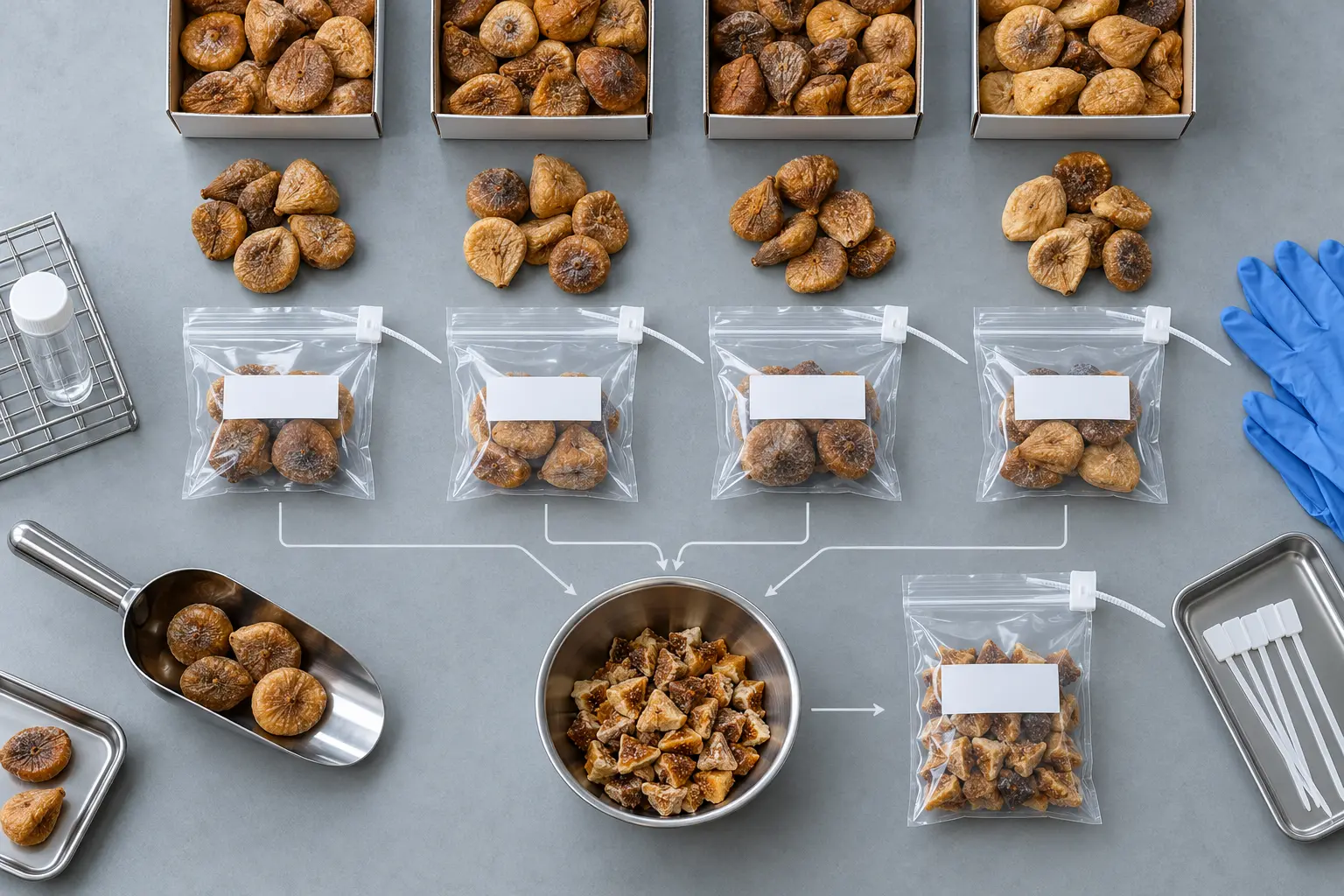
EU Implementing Regulation 2023/2782 contains a dried-fig-specific official-control method for mycotoxins. It uses increments of about 300 g and, for lots of 15 tonnes or more, 100 increments forming a 30 kg aggregate sample that is divided into laboratory samples. That rule governs official controls; commercial parties should have a qualified laboratory translate the applicable method into their own pre-shipment plan instead of casually copying the numbers.
Separate limits, tests and entry controls
For EU food placed on the market, the current consolidated Regulation 2023/915 lists maximum levels for dried figs of 6.0 μg/kg for aflatoxin B1, 10.0 μg/kg for the sum of B1, B2, G1 and G2, and 8.0 μg/kg for ochratoxin A. The applicable product category, use and preparation state still need checking. A statement such as “aflatoxin tested” is incomplete without the identified lot, method, reporting limits, units, result and laboratory.
EU entry measures are a separate question. The current consolidated Implementing Regulation 2019/1793 lists dried figs from Türkiye for increased controls on aflatoxins with a 20% frequency at the date of this guide. The annex is amended periodically, so the importer or customs adviser should recheck the current consolidated text, CN code, product form and border procedure before shipment. A pre-shipment report does not remove official-control authority, and a management-system certificate is not a lot test.
Lock packaging and label data
Specify food-contact inner material, outer carton, net weight, closure, pallet pattern, lot marking, storage conditions and shelf-life expression. Ask what evidence supports the proposed shelf life for the offered process and pack. Agree controls for moisture, odour transfer, crushing and pests during storage and transport. If a private label is planned, approve a plain-text data sheet before artwork and a production proof before printing.
For prepacked EU retail food, Regulation 1169/2011 sets mandatory food information and requires it in a language easily understood in the Member State of sale. Review the food name, ingredients where required, net quantity, date marking, storage or use instructions, responsible food business operator, nutrition declaration where applicable, origin statements where required or needed to avoid misleading, lot coding and legibility. The responsible importer should validate the final destination-market artwork.
Send one comparable buyer checklist
Send each candidate the same table: product form and use; origin and production period; class, size and presentation; defect definitions and tolerances; proposed lot and sample plan; lot-specific mycotoxin report proposal; packaging and pallet data; shelf-life basis; traceability documents; destination label data; Incoterms® rule and named place; lead time; and which values remain estimates.
A practical request is: “Please quote the attached dried-fig specification for [destination and use]. Return the completed tolerance table, lot and sampling plan, proposed laboratory scope, pack sheet and label data. Separate confirmed values from options and do not substitute another crop, lot or presentation without written approval.” Use our export quote request guide to keep the commercial comparison aligned. Final price, stock, minimum order, certificates and delivery timing must be confirmed against the real offer.