
Distributors buy for a shelf, a channel and a margin, not just a flavor. A sourcing inquiry for a beverage becomes useful when it specifies the drink category, pack, destination and expected volume. The details below help turn a broad request into a shortlist that can be assessed properly.
1. Set the drink and channel; 2. specify the pack
Begin with the product type: juice, flavored drink, mineral water, carbonated soft drink or another category. Include intended channel—supermarket, convenience, food service or wholesale—because the selling unit and display needs may differ. Then give the consumer pack you want: volume, bottle or can, closure, multipack if relevant and acceptable substitutes. A 200 ml carton and a 1 L bottle may serve different customers even when the flavor is identical.
Tell the sourcing partner whether you need an existing brand or a product under your own label. If you have a reference photo, use it to clarify form and shelf presentation, not as a substitute for the written brief. Explore the beverage category page and our private label approach if brand ownership is central to the project.
3. Ask for a real specification; 4. review the destination label
Request the proposed product’s actual ingredient declaration, nutritional information where applicable, shelf life, storage guidance and packaging specification. If your market or retail customer requires particular composition or claims, flag them at the beginning. A claim such as “sugar free,” “natural” or “halal” requires product-specific evidence and market review; it should never be inferred from a category image or a generic catalog line.
The importer should confirm local labeling and import rules for the exact product and destination before placing an order. Languages, mandatory particulars, deposit or recycling systems and importer details may affect the pack. For EU destinations, the European Commission’s Access2Markets portal is an official starting point. An individual product check is still needed.
5. Calculate the trading unit, not just the bottle
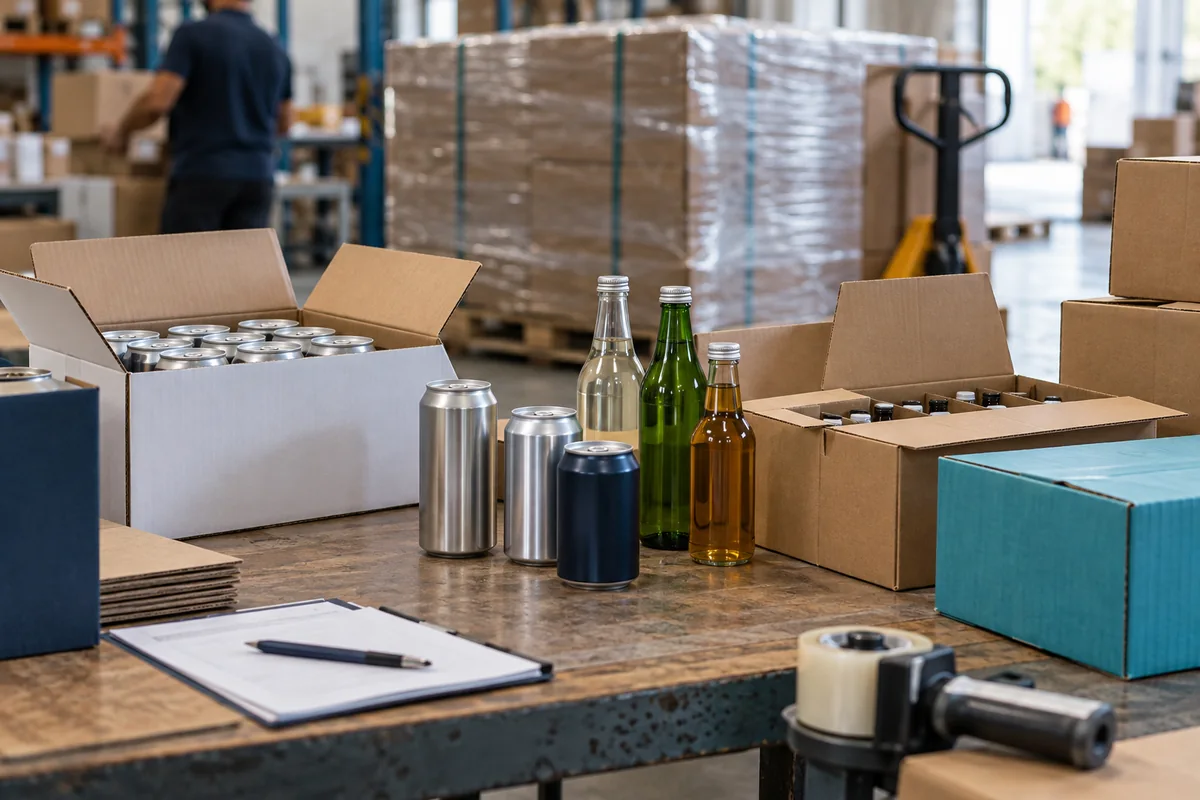
Ask for units per carton, carton dimensions, gross weight, pallet pattern and the proposed order multiple. These figures let a buyer compare warehouse and freight implications alongside unit price. Beverage packaging can be heavy or fragile; container loading and handling assumptions can change the result. Do not assume the same number of cartons fits every bottle or can format.
State your named destination and requested trade term. The ICC’s Incoterms® resource explains how delivery obligations differ. A quote that says only “shipping included” leaves too much open: identify the named place and which freight, insurance and clearance tasks the proposal covers.
6. Define what a sample must prove
A sample should answer a specific question: taste acceptance, packaging quality, label review or carton handling. Confirm whether the sample represents the proposed final formulation and pack. Record differences before relying on it for a retail presentation. For a new label, request the technical specification and artwork proof alongside the sample, then reconcile both with the eventual offer.
When you contact us, include the beverage type, volume, pack, destination, estimated first order and preferred delivery basis. If you are still comparing channels, say which assumptions are open. Our quote request guide provides a compact template, and the inquiry page is ready when you have the key details.
- Which drink and sales channel?
- Which consumer pack and brand route?
- Which specification and shelf-life target?
- Which destination-label requirements?
- Which carton, pallet and order multiple?
- What should the sample and quote confirm?